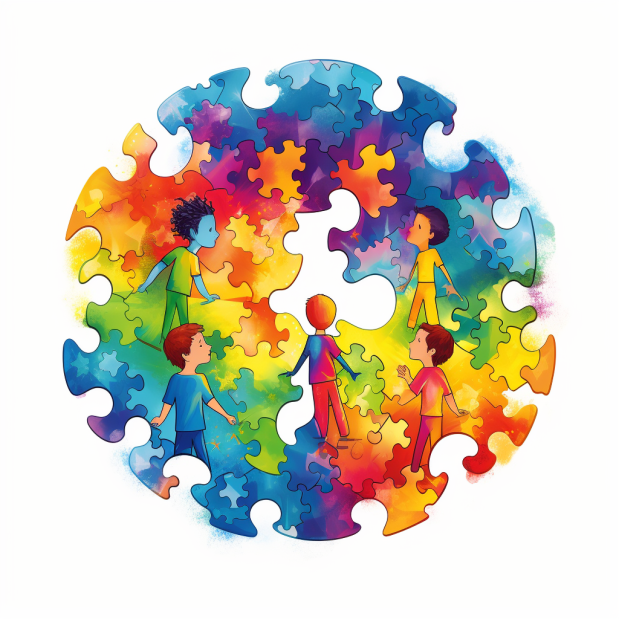

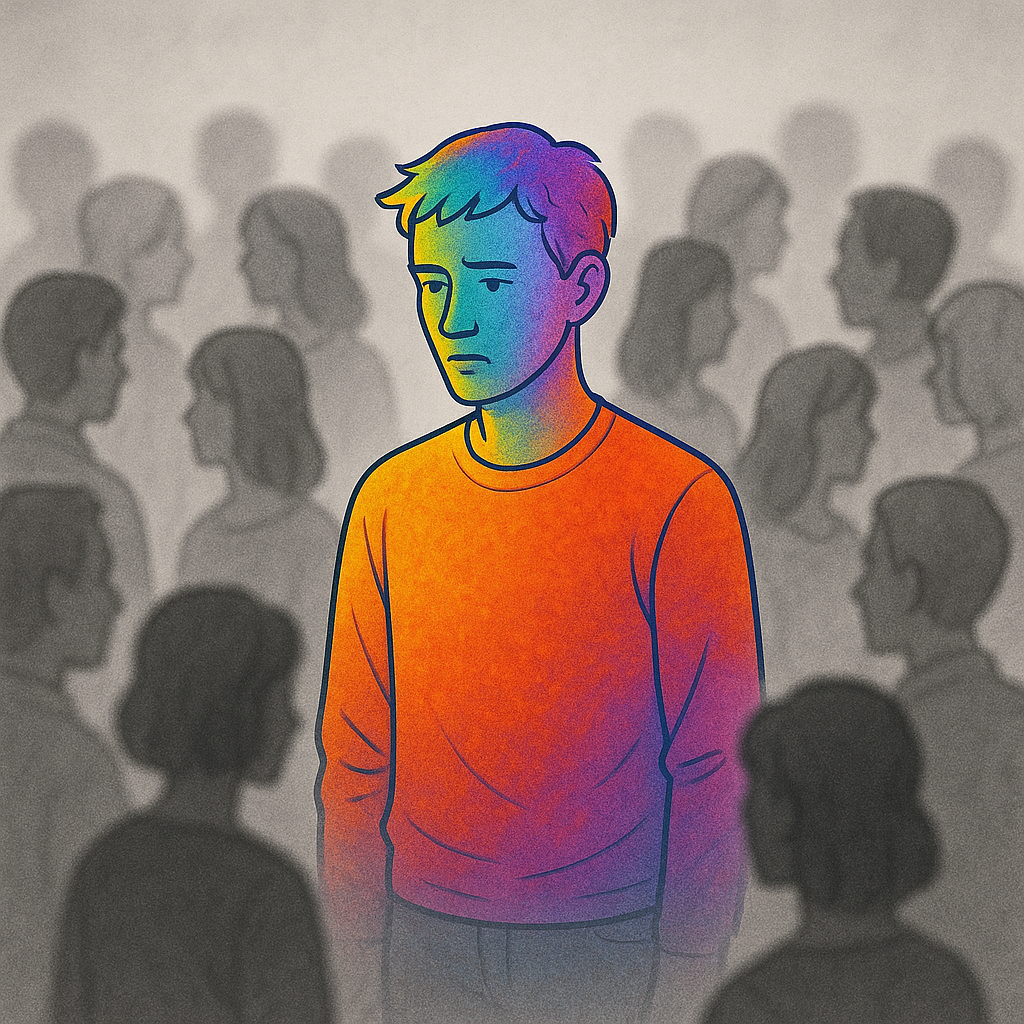
The world has a funny way of defining “normal.” It sets invisible rules—how one should talk, act, think, or even feel—and anyone who falls outside that narrow lane is often seen as “different.” For neurodivergent individuals, this difference is not just a passing phase or a small quirk—it’s their entire existence. The way they experience life, communicate, and process the world doesn’t neatly fit into the conventional mold society has built. And because of that, almost everything they do, say, or believe is questioned, analyzed, or dismissed as “wrong.”
It’s an exhausting reality to face. Imagine living in a constant state of defense—where even the most innocent action becomes subject to scrutiny. A laugh might be “too loud,” a statement “too blunt,” a movement “too repetitive.” But what society often fails to realize is that neurodivergent individuals aren’t trying to challenge the norm; they are simply being themselves in a world that was not built with them in mind.
And that’s where the heartache begins.
For many neurodivergent people, rejection doesn’t come in the form of outright cruelty. It’s subtle—a teacher who assumes disinterest because eye contact isn’t made, a friend who stops inviting them out because “they never talk much,” a coworker who labels them “awkward” for speaking honestly instead of sugarcoating words. These micro-moments stack up over time, chipping away at confidence and creating the illusion that being oneself is somehow wrong.
The truth is, it hurts. It hurts deeply to be questioned for being authentic. It hurts when the world values conformity more than honesty. It hurts when every action feels like it’s under a microscope, when you’re forced to rehearse social interactions to fit in, and when even then—it’s not quite enough.
But here’s the short and skinny of it: it’s going to happen. The world, for all its advancements and talk of inclusivity, still struggles to understand neurodiversity. People are quick to celebrate it in theory but slow to accept it in practice. And as caregivers, parents, friends, and advocates, it’s important to acknowledge that truth—not to dwell on it, but to prepare for it.
So, how do we deal with it? How do we protect our loved ones and ourselves from the weight of the world’s judgment?
The first step is acceptance—true, unconditional acceptance. Not the kind that says, “I love you despite your differences,” but the kind that says, “I love you because of them.” When a neurodivergent individual feels safe at home or within their support circle, the world’s criticism loses some of its sting. They begin to understand that their value doesn’t depend on how well they mimic societal expectations, but rather on who they are at their core.
The second step is education. The more we understand about neurodivergence, the more power we have to reshape how society views it. It’s about shifting from judgment to curiosity, from pity to empowerment. When others question behavior, the best response is often not anger, but explanation. A calm, confident explanation can plant a seed of awareness that might grow into understanding later.
The third step—perhaps the hardest—is resilience. This doesn’t mean developing a thick skin and pretending that words or looks don’t hurt. It means recognizing that you can’t control how others perceive you, only how you respond. It’s learning to breathe through the stares, to stand tall when misunderstood, and to remember that your worth is not defined by another’s comfort level.
Caregivers, too, carry a heavy burden in this fight. Trying to navigate all the rules, expectations, and opinions thrown at you can be overwhelming. It can feel like you’re constantly defending your parenting choices or explaining your child’s behaviors to those who just don’t get it. But don’t lose heart—you are doing the right thing for them. Even on the days when it feels like the world is against you, your persistence and love are the anchors that keep them grounded.
It’s also important to teach coping strategies that empower rather than suppress. For instance, help neurodivergent individuals identify safe spaces—places or activities where they can truly be themselves without fear of judgment. Encourage self-expression through art, writing, music, or movement. Teach them that being different isn’t a curse—it’s a kind of beauty that brings new ways of thinking into the world.
And when the world pushes back, remind them that it’s okay to take a step away. It’s okay to rest. It’s okay to rebuild before facing it again. There is no shame in needing space to heal from misunderstanding.
Because here’s the deeper truth: neurodivergence isn’t the problem. The problem is a world that hasn’t learned how to listen without trying to fix. A world that mistakes difference for disorder, and individuality for defiance.
But slowly—very slowly—the narrative is changing. Every time someone shares their story, every time a parent advocates for inclusion, every time a teacher adjusts their classroom approach, we move a little closer to a world that celebrates different ways of thinking instead of fearing them.
Until that world fully arrives, hold strong. Keep loving fiercely. Keep advocating loudly. And keep reminding yourself—and your loved ones—that fitting into a broken system isn’t the goal. The goal is to live authentically, to find joy in the small victories, and to know that you belong, even when the world says otherwise.
Because in the end, the world doesn’t define neurodivergence—neurodivergent individuals redefine the world.