

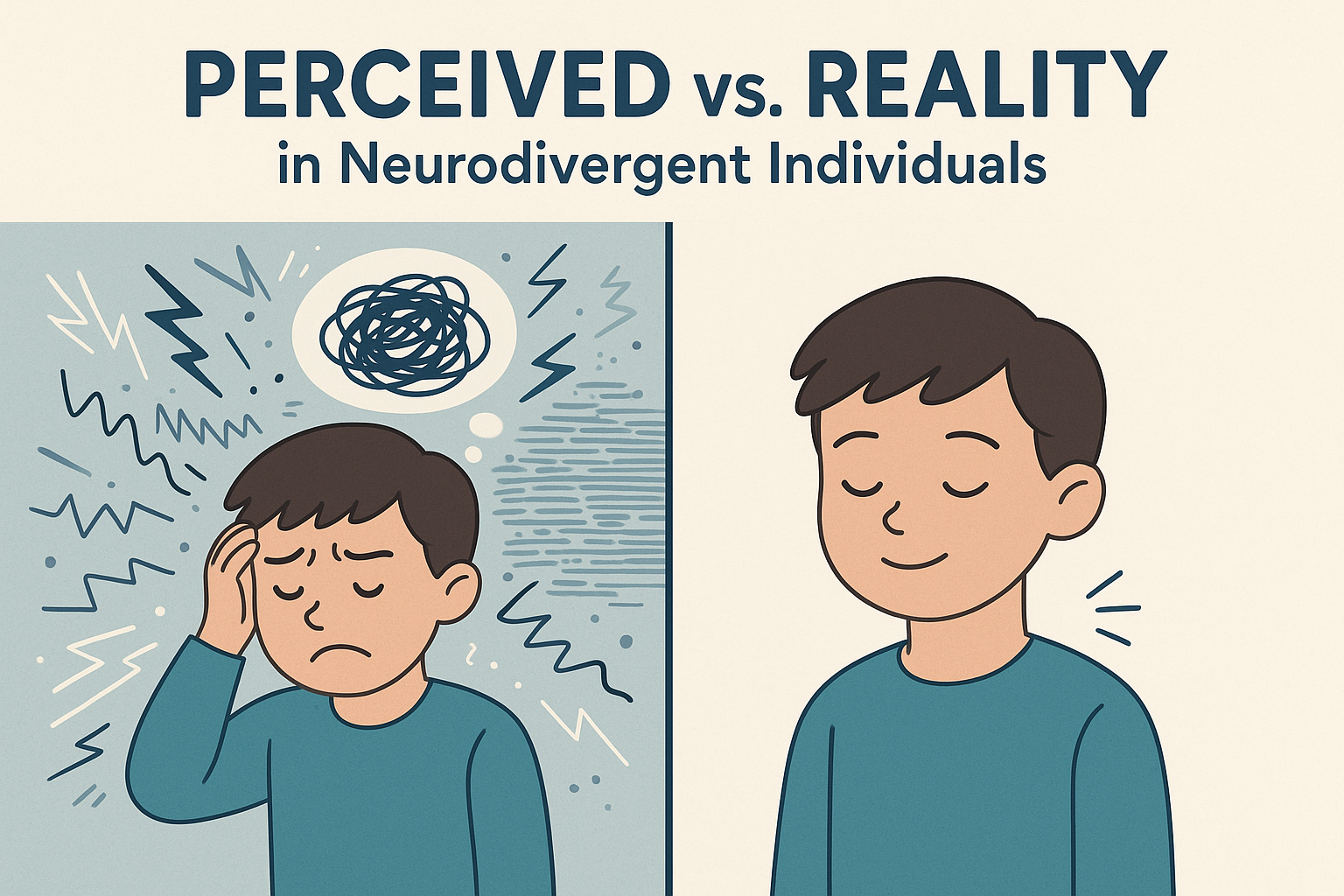
There’s a fine line between what is perceived and what is real, especially in the world of neurodivergence. For many neurodivergent individuals, their minds process information, emotions, and experiences through a lens that’s vastly different from the so-called “neurotypical” framework. What might seem insignificant to you or me can feel like a tidal wave to them. Likewise, something that would send most of us into a panic might barely register in their emotional field.
Let’s take a simple example—imagine that your child believes they’ve done something wrong. Perhaps no one has said a word, but a tone of voice, a sudden silence, or even a subtle facial expression sets their mind spinning. They begin to replay the moment, dissecting it in their head, each time adding new layers of “what if.” What if you’re mad? What if they’re in trouble? What if they disappointed you? Their perception becomes their reality, and that reality can trigger anxiety, overstimulation, and even emotional shutdown or outburst.
To us, from the outside looking in, nothing happened. But to them—everything happened.
That’s the complexity of perception in the neurodivergent mind. Their emotional radar doesn’t always calibrate with the external world. What is “real” is filtered through sensations, memories, and feelings that are sometimes amplified or distorted. Their inner world is a constant stream of data—sounds, lights, words, emotions—often all competing for attention at once. So when something seems off, even slightly, it doesn’t just brush by; it digs in, takes root, and grows into mental static that they can’t easily tune out.
Now, flip the script. Something truly wrong might occur—a harsh comment from a peer, an uncomfortable encounter, or even physical pain—and they brush it off like nothing happened. They might continue their day humming, stimming, or focusing on something they enjoy, giving the impression that all is well. Inside, though, their brain may have filed that event in a hidden compartment, one that won’t open until days or weeks later when it suddenly resurfaces as an emotional storm seemingly “out of nowhere.”
That’s the paradox: sometimes their perception amplifies the small things, and sometimes it dulls the big ones. The key lies in learning how to navigate both.
Navigating the Divide
As caregivers, parents, or teachers, our role isn’t to correct their perception—it’s to understand it. That means validating their feelings even when we don’t see the cause. Saying, “I understand that feels wrong to you,” is often more effective than trying to explain that it isn’t. Validation creates safety, and safety is what helps them regulate.
At the same time, helping them bridge the gap between perception and reality is a lifelong learning process. One simple strategy is reflection: guiding them to step outside of the moment. For example, when they believe something is wrong, ask gentle questions:
- “Can you tell me what makes you feel that way?”
- “What do you think happened?”
- “If we look at what really happened, does it still feel the same?”
The goal isn’t to prove them wrong—it’s to help them recognize how their mind interprets the world and to slowly build awareness of the differences between perception and reality.
Visual aids can help, too. For some individuals, seeing emotions and scenarios drawn out or color-coded brings clarity. Others benefit from a “pause plan”—a structured way to take a break when they feel overwhelmed. Maybe it’s going to their room, squeezing a stress ball, or listening to calming music. When perception floods the senses, having an automatic response helps break the cycle before it leads to overstimulation or a meltdown.
The Caregiver’s Challenge
Now, the short and skinny of it—this is going to happen. No matter how patient, loving, or experienced you are, these moments will come. There will be days when you can’t tell what’s real or what’s perceived, and you’ll find yourself walking that fine line right alongside them. You’ll question whether you handled it right, whether you missed something important, or whether you made it worse by trying to help.
Don’t let that self-doubt take root. You’re doing the right thing.
Caring for someone neurodivergent means accepting that clarity doesn’t always come instantly. You might spend hours navigating through emotions that don’t seem logical, trying to apply reasoning to a world that doesn’t always run on reason. It’s stressful, especially when layered with the ever-shifting maze of school policies, therapy recommendations, legal rights, and medical guidance that seem to change by the week. Sometimes it feels like you need a degree just to keep up—and still, nothing prepares you for the emotional exhaustion that comes from simply wanting to do right by them.
But here’s the truth: showing up, listening, and trying matters more than perfection. Even when they don’t respond, even when they lash out, they know you’re there. That consistency—the calm presence—is what eventually helps them differentiate between what they feel and what is.
Finding the Balance
There’s beauty in how neurodivergent minds experience the world. Yes, the perception-versus-reality struggle can be hard, but it’s also what gives them their unique perspective, creativity, and depth. The same mind that perceives a harmless glance as disapproval can also perceive music as colors, or laughter as energy, or love as something so pure it transcends logic.
Our goal isn’t to “fix” their perception—it’s to help them live peacefully within it. To teach coping, self-reflection, and self-understanding without stripping away the essence of how they see the world.
As caregivers, we must learn to slow down, breathe, and remember that progress doesn’t always look like progress. Some days will be victories measured in moments—a calm transition, a shared laugh, or even a meltdown that ended sooner than last time. Each of those moments matters.
In the end, perception is part of reality. Their truth, though different from ours, is still truth to them. The task is to guide them gently toward balance—helping them see that the world isn’t always against them, that sometimes the fear they feel isn’t real, and that sometimes, what they think is nothing, really does need attention.
It’s an ongoing journey, not a destination. But if you’re walking that path with patience, love, and an open heart, then rest assured—you’re doing exactly what they need.