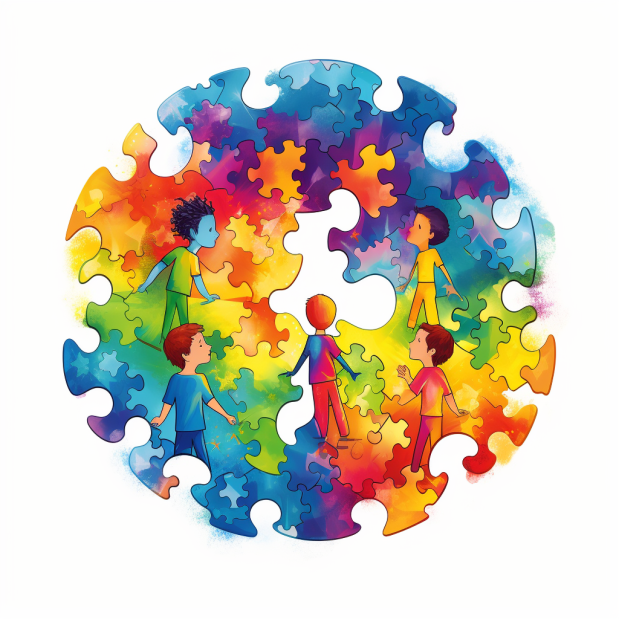


It’s a question that every parent of a neurodivergent child has asked at least once—can and will they ever learn? Not out of frustration alone, though frustration often walks hand-in-hand with the unknown, but out of genuine curiosity and hope. The question lingers in our minds not because we doubt their ability, but because their progress rarely fits into the world’s timelines or expectations. What seems like a simple skill to us may take months, even years, for them to grasp—and that’s perfectly okay.
Neurodivergent learning is not linear; it is rhythmic, unpredictable, and uniquely beautiful. There are moments when progress seems stagnant, and then suddenly, like a sunrise breaking through morning fog, everything clicks. What we see as a delay is, in reality, a different form of understanding—a different path through the maze of learning.
For most children, repetition leads to mastery. For neurodivergent children, repetition may lead to frustration unless the repetition is meaningful to them. The difference isn’t in whether they can learn, but how they learn. Some children on the spectrum need structure and visual patterns—color-coded charts, daily routines, or step-by-step breakdowns of tasks. Others may learn through repetition, sensory association, or even emotional connection to the concept. And sometimes, learning happens in silence, deep inside, long before we ever see it reflected outwardly.
Parents often measure progress in milestones. Society measures it in grades, test scores, and timelines. But neurodivergent progress can’t be captured on a report card. Sometimes, it’s the simple act of tying a shoe after five years of trying. Sometimes, it’s finally saying “I love you” after a decade of nonverbal communication. Each step, no matter how small, is monumental because it represents not just learning—but endurance.
When we think about when they will learn, we must also consider the complexity of their world. Their lives are filled with sensory input that we can’t always perceive. The hum of fluorescent lights, the texture of fabric, the distant bark of a dog—all competing for attention. Their brains are constantly filtering, translating, and recalibrating, often leaving little energy for what we might call “simple” tasks. What we perceive as slowness may actually be deep processing—a marathon of internal computation just to make sense of their environment.
Learning, for them, isn’t delayed; it’s layered. Each experience, every moment of sensory overload, every small victory builds toward understanding. It’s easy to look at a neurodivergent child struggling with a basic skill and assume they’re not ready. Yet, the reality is that their readiness depends on countless factors: emotional stability, sensory comfort, environmental predictability, and trust. Once those align, the door to learning swings wide open—and what comes next can be astonishing.
I’ve seen moments that defy logic. A child who couldn’t hold a pencil correctly for years suddenly writes their name perfectly after watching a sibling do it once. Another who refused to speak for ages suddenly recites an entire movie script word-for-word. They learn, not when we think they should, but when they are ready to. And readiness is not laziness, nor defiance—it’s self-preservation. Their minds protect them until the timing feels right.
As parents and caregivers, our challenge is patience—true, unshakable patience. It’s not the kind that waits for a few days or even a few months; it’s the kind that accepts years as part of the journey. It’s the understanding that progress is not measured in pace but in presence. When we stay beside them, even in silence, even through repetition that seems endless, we are part of their learning process.
Their learning pace often mirrors the complexity of their internal world. Some are visual thinkers who map out entire systems in their mind before ever taking action. Others are emotional learners who need to feel secure before they can do. And still others are logical learners who won’t act until they’ve observed, tested, and confirmed. The beauty lies in the diversity of their learning paths—each one a story of perseverance and quiet triumph.
It’s easy to get discouraged when years pass and a skill remains unmastered. But if we step back and look deeper, we see something remarkable: while they may not have mastered that one skill, they’ve mastered a dozen others we didn’t even notice. Emotional resilience. Pattern recognition. Empathy. These are not taught in classrooms, yet they are invaluable traits learned through experience and time.
So when we ask, “Can and will they ever learn?” the answer is a resounding yes. But not in the way the world expects. They will learn at their own pace, in their own rhythm, often surprising us with wisdom and insight beyond their years. They will stumble, pause, and try again—each time building a foundation stronger than before.
Our role is not to force learning but to nurture it. To create an environment where they feel safe to fail, to explore, to grow. To celebrate not the speed of their progress but the sincerity of their effort. Learning, after all, isn’t about how fast they reach the finish line—it’s about how courageously they continue to take each step.
The next time you find yourself wondering if your neurodivergent child will ever “get it,” remember: they are getting it. Just not on your clock. Their journey is not about ticking boxes or matching timelines—it’s about discovering the world in their own extraordinary way. And when they finally reach that breakthrough moment, after months or even years of trying, the joy that follows will make every ounce of patience worth it.
Because yes—they can learn. They will learn. And when they do, it will be nothing short of miraculous.