We Are Still Standing

We Are Still Standing

January has a way of stripping things down.

The decorations come down. The noise fades. The calendar resets whether we are ready or not. And suddenly, we are left with ourselves, our families, and the quiet truth of what it took to get here.

If you are reading this from inside an autism household, you already know that making it to January is not a small thing. It is not something that happens by accident. It is survival through routines that break, sleep that never fully comes, appointments that stack on top of each other, and emotions that rarely have room to land.

We do not talk enough about what it means to still be here.

Not thriving.
Not winning.
Not having it all figured out.

Just standing.

There is a strange pressure that comes with a new year. It whispers that you should be better by now. More organized. More patient. More hopeful. It does not account for the nights spent calming a child who cannot explain why the world feels wrong. It does not factor in the mental math of managing therapies, school meetings, work responsibilities, and the constant question of whether you are doing enough.

Some years, survival is the achievement.

In our house, survival looks quiet from the outside. No dramatic moments. No obvious crisis. Just persistence. Getting up. Showing up. Holding things together long enough for everyone else to breathe. That kind of strength does not come with applause. It rarely even gets noticed.

And yet, it matters.

If you are exhausted right now, that does not mean you failed last year. It means you carried weight. If you are still unsure what this year will look like, that does not mean you are behind. It means you understand that autism does not run on neat timelines.

This space exists because of that reality. Autism is not a phase we move through. It is a life we live. Some days are heavy. Some days are manageable. A few days even feel light. But every day requires something from us.

Sometimes, the only thing we can do is acknowledge the truth. We made it. We are still standing.

And that is enough for today.

Before I close this first post of the year, I want to share something small but meaningful. There are days when I reach for clothing that feels less like fashion and more like armor. Something warm. Something honest. Something that quietly says, I am still here. One of the pieces in our shop was created with exactly that feeling in mind. It is not loud. It is not performative. It is simply comfortable, grounded, and real. If you want to see it, you can find it here:
👉 https://autismisourlives.myshopify.com

No pressure. No expectation. Just an option for days that feel heavier than they should.

If this post resonates with you, know this. You are not alone. Not in the fatigue. Not in the quiet strength. Not in the act of standing when everything in you wants rest.

We are still standing. And for now, that is enough.

The Inquisitive Mind of Neurodivergent Individuals

The Inquisitive Mind of Neurodivergent Individuals

I tell my kids all the time that everyone is free to make any choice they wish. Every single one. The world doesn’t stop you from choosing—what it does is hand you the consequence that comes after. And consequences aren’t always punishments; they’re simply results. Some are good, some are bad, and some are the kind you don’t quite know how to label yet. You can make the best possible choice with the best intentions and still land in a situation where someone feels offended, frustrated, or confused. You can walk across a parking lot to help a stranger pick up something they dropped and still be met with annoyance instead of appreciation. But I still tell my kids: That’s a good consequence. Because you did the right thing. You helped where others wouldn’t. You chose kindness, and kindness is never wasted.

Now, in our world—our family world—this conversation takes on a different weight. Neurodivergent individuals often experience choices through a lens most people never even realize exists. Their minds don’t just wander; they investigate. They don’t simply react; they analyze. And they don’t accept surface-level reasoning merely because “that’s how people do it.” For them, every choice is part of a logic chain, a personal equation where intention and outcome are processed side-by-side with curiosity, precision, and sometimes blunt honesty.

This inquisitive mindset is one of the greatest gifts they have… but it can also create misunderstandings in a world that rarely takes the time to slow down and see the full picture.

When someone on the spectrum makes a choice, they often rationalize it in ways that make perfect sense to them. If they see a problem, they want to fix it. If they notice someone struggling, they want to help. If something appears inefficient, incorrect, or out of order, their instinct is to correct it. To them, that is the logical and compassionate response. It’s what should happen. But to others—especially neurotypical individuals who follow hidden social rules without ever consciously naming them—those same actions can be seen as intrusive, abrupt, or overly literal.

One of my kids might jump in to “help” with a task I didn’t ask for help with because, in their mind, it is inefficient to let someone struggle alone. Another might correct a statement someone makes because accuracy matters more than social comfort. Another might repeat a question until they receive clarity because uncertainty is far more uncomfortable to them than repetition is to the person answering.

To them, these are logical choices. To us, they sometimes look like interruptions, overreactions, or stubbornness.

So how do we bridge that gap?
How do we teach them that their logic isn’t wrong—it just needs context?
How do we help them understand the difference between helping and hindering without crushing their confidence or dimming their inquisitive spark?

We start with what they already understand: choices have consequences. But we expand that idea into something more nuanced.

In our home, I’ve learned that teaching cause and effect works best when it’s explained, not imposed. Saying “Don’t do that” never works nearly as well as sitting down and breaking apart the why behind the reaction. Neurodivergent minds thrive on clarity. They thrive on explanations that connect A to B to C in a way that feels fair and structured.

So instead of saying, “You shouldn’t correct someone like that,” we say:

“When you correct someone abruptly, even if you’re right, the other person might feel embarrassed. That embarrassment becomes part of the consequence. It doesn’t make your information wrong—it just means the timing and delivery changed the outcome.”

Or:

“When you rush to help someone who hasn’t asked for help, the consequence might be frustration on their part. Not because your intention was bad, but because they weren’t ready for support.”

Or my personal favorite:

“You can still do the right thing, but sometimes the right thing includes understanding what the other person needs—not just what you see.”

This approach gives them something solid to hold onto. It doesn’t punish their curiosity or their logic. It builds social understanding the same way you’d teach a math formula or a science concept: step by step, with examples and patterns they can recognize.

The truth is, many neurodivergent individuals navigate the world without the unspoken rulebook the rest of society relies on. They don’t guess social norms—they observe them, decode them, test them, revise them. And when something doesn’t make sense, they question it. Not out of defiance, but out of genuine curiosity.

That inquisitive mind is their strength. It’s the engine behind their creativity, their problem-solving, their honesty, and their unique view of the world. But like any powerful engine, it works best when guided—not controlled, not suppressed, but guided.

Our job as parents, caregivers, friends, and allies is to help them see that choices are not just about logic. They are about connection. They are about understanding how their actions ripple outward and how those ripples affect the people and environments around them. Not to limit them, but to empower them with a fuller picture—the one the rest of the world often takes for granted.

And as they learn this, something incredible happens. Their choices become not just logical, but insightful. Not just helpful, but empathetic. Not just inquisitive, but deeply aware.

That is the beauty of the neurodivergent mind.
It is curious.
It is analytical.
It is compassionate in its own structured, thoughtful way.

And when we take the time to teach—not correct, not shame, but teach—they not only understand the difference between helping and hindering… they thrive.

Because at the end of the day, their choices matter. Their minds matter. And the world is a far richer place because they don’t simply accept it as it is—they question it, explore it, and reshape it one curious thought at a time.


What to Do During a Total Breakdown

It will happen. Maybe not today, maybe not tomorrow—but one day, everything will collide at once. The stress, the overstimulation, the confusion, the inability to process what’s happening around them. It’s called a breakdown, and for many families of neurodivergent individuals, it’s one of the hardest experiences to face. There’s no “one size fits all” approach to these moments because every person, every situation, and every community’s resources are different. But there is one constant: you are not failing them by getting help.

When a total breakdown happens, emotions run high—both for them and for you. You may see your child or loved one screaming, crying, thrashing, or completely shutting down. You might see fear in their eyes, or you might see nothing at all—just a blank stare as they spiral inward. You might try talking calmly, but they can’t hear you. You might try holding them, but they push you away. It’s chaos wrapped in heartbreak.

In that moment, your first instinct might be to call someone—anyone—who can help. And that’s okay. The question many caregivers wrestle with is: Who do you call? Do you call the police? Do you rush to the ER? What if they end up in a psychiatric hold? What if you live in a small town where resources are miles—or hours—away?

Let’s start with the hardest truth: sometimes you have to make a decision that hurts in the moment but helps in the long run.


When to Call for Help

If your loved one is a danger to themselves or others—if they are breaking things, threatening harm, or completely out of control—it’s time to call for help. In urban areas, there are often crisis intervention teams trained specifically for neurodivergent or mental health crises. But in rural communities, that may not be the case.

If the only option you have is the local sheriff’s department, it’s still okay to call. However, when you do, make it clear from the start that this is a mental health crisis, not a criminal one. Use those exact words. Ask if they can send someone trained in crisis response or with de-escalation experience. You’re not calling because they did something wrong—you’re calling because they need help.

If there is time before things escalate too far, you can also reach out to crisis hotlines or mobile response units. Many states now have 988, the national mental health crisis line, which can connect you with trained counselors 24/7. They can help guide you through next steps—whether that’s waiting it out safely, bringing them to a facility, or arranging for someone to come evaluate them.


What to Expect if You Go to the ER

In some cases, going to the emergency room is the safest option. It’s not an easy choice, but it’s a responsible one. At the ER, the staff will likely call in a behavioral or mental health representative to assess the situation. If they determine that your loved one needs further care, they may issue what’s known as a 72-hour psychiatric hold.

Those three days can feel like an eternity. You’ll question yourself, you’ll cry, and you’ll probably feel like you failed. But here’s the truth: you didn’t fail them. You did exactly what a loving, responsible caregiver is supposed to do—you got them the help they needed when they couldn’t ask for it themselves.

These facilities—especially those with behavioral wards—are not prisons. They are controlled environments designed to help your loved one stabilize, rest, and receive professional care. The staff are trained to understand behavioral outbursts, medication needs, sensory sensitivities, and trauma responses. It’s not punishment—it’s support.

Even if that hospital is four hours away, it’s worth the drive. You’d drive that far if they broke their leg or had a high fever that wouldn’t go down. Their mental and emotional health deserves the same urgency.


The Rural Challenge

In rural areas, help can be limited. Sometimes the nearest behavioral health hospital is hours away, and local ERs might not have a behavioral ward at all. In those cases, they may connect you virtually with a psychiatric representative who will evaluate your loved one through a video call. It might feel strange—like you’re pleading your case through a screen—but this is becoming standard practice in many small hospitals.

Stay calm, explain the situation honestly, and don’t minimize what’s happening. The more information the representative has, the better they can make decisions about treatment and next steps. If they recommend transfer to another facility, ask for transportation options. Most hospitals can arrange medical transport if the distance is too far for you to drive safely.

Yes, it’s inconvenient. Yes, it’s scary. But remember: help is help, no matter how far away it is.


After the Breakdown

Once things calm down—whether at home or after a hospital visit—you’ll need to process what happened. They will too, in their own way and time. It’s important not to make them feel ashamed for losing control. They didn’t choose the breakdown—it happened because their world became too heavy to hold.

You can talk with the care team about what led up to the crisis. They can help you identify triggers, patterns, and coping strategies. Many facilities will connect you with outpatient resources, follow-up appointments, or therapy options. Use those connections.

And take care of yourself, too. These moments are draining beyond words. You may feel like you’re holding your breath through every second of it—and when it’s over, the exhaustion hits like a tidal wave. It’s okay to cry. It’s okay to step outside for air. It’s okay to need help for yourself as well. You’re human.


The Short and Skinny of It

A total breakdown is not the end of the world, even if it feels like it in the moment. It’s a sign that your loved one needs help—immediate, compassionate, professional help. Whether that comes from the ER, a crisis team, or a behavioral health facility, you are doing the right thing by seeking it.

Yes, it might mean driving four hours in the middle of the night. Yes, it might mean a 72-hour hold. But those are not signs of failure—they’re steps toward healing.

In the end, what matters most is that they are safe, you are safe, and help is on the way. That’s all anyone can ask for in those moments. You’re not alone. This is part of the journey—and you are doing the very best you can.

The World vs. Neurodivergence

The world has a funny way of defining “normal.” It sets invisible rules—how one should talk, act, think, or even feel—and anyone who falls outside that narrow lane is often seen as “different.” For neurodivergent individuals, this difference is not just a passing phase or a small quirk—it’s their entire existence. The way they experience life, communicate, and process the world doesn’t neatly fit into the conventional mold society has built. And because of that, almost everything they do, say, or believe is questioned, analyzed, or dismissed as “wrong.”

It’s an exhausting reality to face. Imagine living in a constant state of defense—where even the most innocent action becomes subject to scrutiny. A laugh might be “too loud,” a statement “too blunt,” a movement “too repetitive.” But what society often fails to realize is that neurodivergent individuals aren’t trying to challenge the norm; they are simply being themselves in a world that was not built with them in mind.

And that’s where the heartache begins.

For many neurodivergent people, rejection doesn’t come in the form of outright cruelty. It’s subtle—a teacher who assumes disinterest because eye contact isn’t made, a friend who stops inviting them out because “they never talk much,” a coworker who labels them “awkward” for speaking honestly instead of sugarcoating words. These micro-moments stack up over time, chipping away at confidence and creating the illusion that being oneself is somehow wrong.

The truth is, it hurts. It hurts deeply to be questioned for being authentic. It hurts when the world values conformity more than honesty. It hurts when every action feels like it’s under a microscope, when you’re forced to rehearse social interactions to fit in, and when even then—it’s not quite enough.

But here’s the short and skinny of it: it’s going to happen. The world, for all its advancements and talk of inclusivity, still struggles to understand neurodiversity. People are quick to celebrate it in theory but slow to accept it in practice. And as caregivers, parents, friends, and advocates, it’s important to acknowledge that truth—not to dwell on it, but to prepare for it.

So, how do we deal with it? How do we protect our loved ones and ourselves from the weight of the world’s judgment?

The first step is acceptance—true, unconditional acceptance. Not the kind that says, “I love you despite your differences,” but the kind that says, “I love you because of them.” When a neurodivergent individual feels safe at home or within their support circle, the world’s criticism loses some of its sting. They begin to understand that their value doesn’t depend on how well they mimic societal expectations, but rather on who they are at their core.

The second step is education. The more we understand about neurodivergence, the more power we have to reshape how society views it. It’s about shifting from judgment to curiosity, from pity to empowerment. When others question behavior, the best response is often not anger, but explanation. A calm, confident explanation can plant a seed of awareness that might grow into understanding later.

The third step—perhaps the hardest—is resilience. This doesn’t mean developing a thick skin and pretending that words or looks don’t hurt. It means recognizing that you can’t control how others perceive you, only how you respond. It’s learning to breathe through the stares, to stand tall when misunderstood, and to remember that your worth is not defined by another’s comfort level.

Caregivers, too, carry a heavy burden in this fight. Trying to navigate all the rules, expectations, and opinions thrown at you can be overwhelming. It can feel like you’re constantly defending your parenting choices or explaining your child’s behaviors to those who just don’t get it. But don’t lose heart—you are doing the right thing for them. Even on the days when it feels like the world is against you, your persistence and love are the anchors that keep them grounded.

It’s also important to teach coping strategies that empower rather than suppress. For instance, help neurodivergent individuals identify safe spaces—places or activities where they can truly be themselves without fear of judgment. Encourage self-expression through art, writing, music, or movement. Teach them that being different isn’t a curse—it’s a kind of beauty that brings new ways of thinking into the world.

And when the world pushes back, remind them that it’s okay to take a step away. It’s okay to rest. It’s okay to rebuild before facing it again. There is no shame in needing space to heal from misunderstanding.

Because here’s the deeper truth: neurodivergence isn’t the problem. The problem is a world that hasn’t learned how to listen without trying to fix. A world that mistakes difference for disorder, and individuality for defiance.

But slowly—very slowly—the narrative is changing. Every time someone shares their story, every time a parent advocates for inclusion, every time a teacher adjusts their classroom approach, we move a little closer to a world that celebrates different ways of thinking instead of fearing them.

Until that world fully arrives, hold strong. Keep loving fiercely. Keep advocating loudly. And keep reminding yourself—and your loved ones—that fitting into a broken system isn’t the goal. The goal is to live authentically, to find joy in the small victories, and to know that you belong, even when the world says otherwise.

Because in the end, the world doesn’t define neurodivergence—neurodivergent individuals redefine the world.

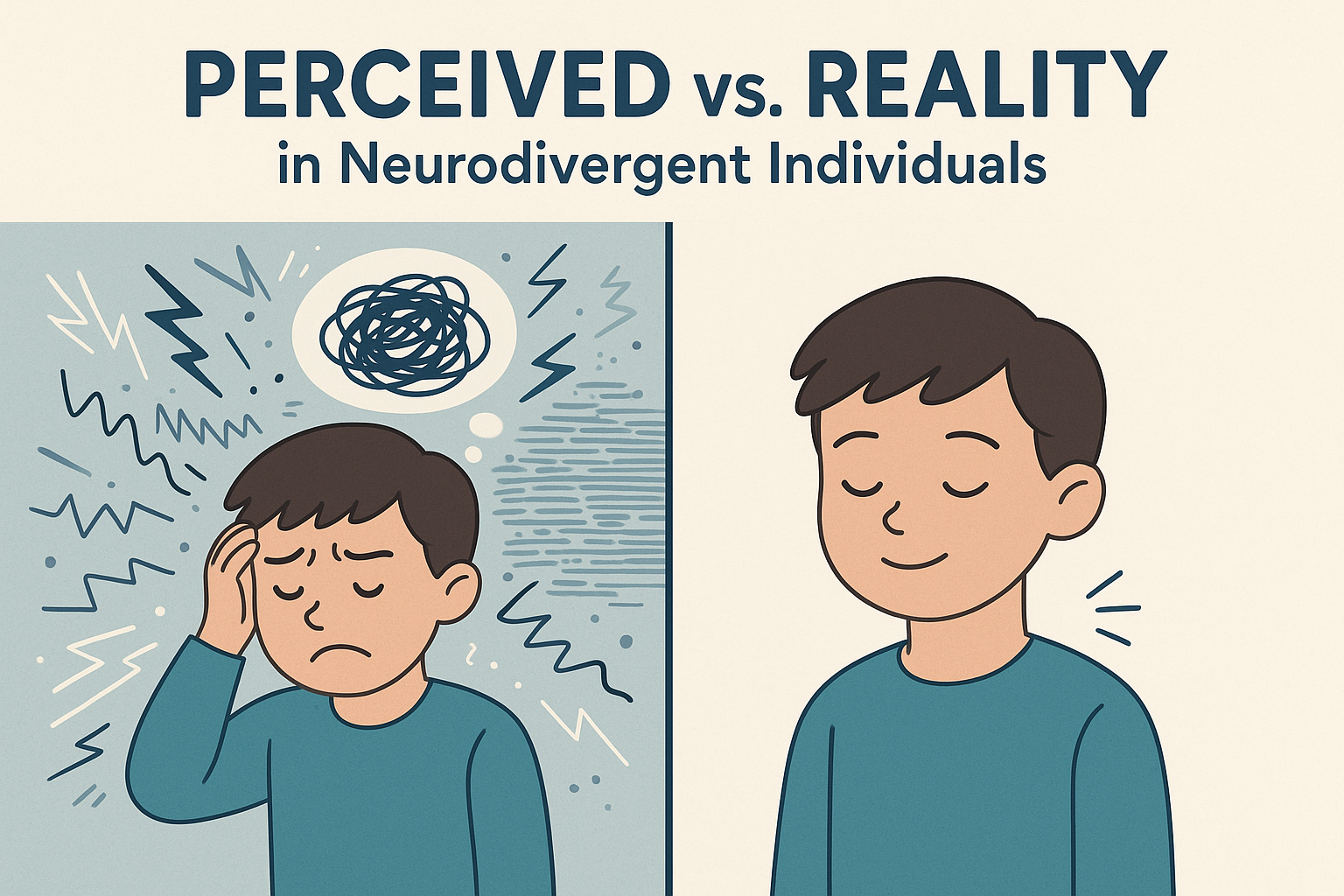
Perceived vs. Reality in Neurodivergent Individuals

There’s a fine line between what is perceived and what is real, especially in the world of neurodivergence. For many neurodivergent individuals, their minds process information, emotions, and experiences through a lens that’s vastly different from the so-called “neurotypical” framework. What might seem insignificant to you or me can feel like a tidal wave to them. Likewise, something that would send most of us into a panic might barely register in their emotional field.

Let’s take a simple example—imagine that your child believes they’ve done something wrong. Perhaps no one has said a word, but a tone of voice, a sudden silence, or even a subtle facial expression sets their mind spinning. They begin to replay the moment, dissecting it in their head, each time adding new layers of “what if.” What if you’re mad? What if they’re in trouble? What if they disappointed you? Their perception becomes their reality, and that reality can trigger anxiety, overstimulation, and even emotional shutdown or outburst.

To us, from the outside looking in, nothing happened. But to them—everything happened.

That’s the complexity of perception in the neurodivergent mind. Their emotional radar doesn’t always calibrate with the external world. What is “real” is filtered through sensations, memories, and feelings that are sometimes amplified or distorted. Their inner world is a constant stream of data—sounds, lights, words, emotions—often all competing for attention at once. So when something seems off, even slightly, it doesn’t just brush by; it digs in, takes root, and grows into mental static that they can’t easily tune out.

Now, flip the script. Something truly wrong might occur—a harsh comment from a peer, an uncomfortable encounter, or even physical pain—and they brush it off like nothing happened. They might continue their day humming, stimming, or focusing on something they enjoy, giving the impression that all is well. Inside, though, their brain may have filed that event in a hidden compartment, one that won’t open until days or weeks later when it suddenly resurfaces as an emotional storm seemingly “out of nowhere.”

That’s the paradox: sometimes their perception amplifies the small things, and sometimes it dulls the big ones. The key lies in learning how to navigate both.

Navigating the Divide

As caregivers, parents, or teachers, our role isn’t to correct their perception—it’s to understand it. That means validating their feelings even when we don’t see the cause. Saying, “I understand that feels wrong to you,” is often more effective than trying to explain that it isn’t. Validation creates safety, and safety is what helps them regulate.

At the same time, helping them bridge the gap between perception and reality is a lifelong learning process. One simple strategy is reflection: guiding them to step outside of the moment. For example, when they believe something is wrong, ask gentle questions:

  • “Can you tell me what makes you feel that way?”
  • “What do you think happened?”
  • “If we look at what really happened, does it still feel the same?”

The goal isn’t to prove them wrong—it’s to help them recognize how their mind interprets the world and to slowly build awareness of the differences between perception and reality.

Visual aids can help, too. For some individuals, seeing emotions and scenarios drawn out or color-coded brings clarity. Others benefit from a “pause plan”—a structured way to take a break when they feel overwhelmed. Maybe it’s going to their room, squeezing a stress ball, or listening to calming music. When perception floods the senses, having an automatic response helps break the cycle before it leads to overstimulation or a meltdown.

The Caregiver’s Challenge

Now, the short and skinny of it—this is going to happen. No matter how patient, loving, or experienced you are, these moments will come. There will be days when you can’t tell what’s real or what’s perceived, and you’ll find yourself walking that fine line right alongside them. You’ll question whether you handled it right, whether you missed something important, or whether you made it worse by trying to help.

Don’t let that self-doubt take root. You’re doing the right thing.

Caring for someone neurodivergent means accepting that clarity doesn’t always come instantly. You might spend hours navigating through emotions that don’t seem logical, trying to apply reasoning to a world that doesn’t always run on reason. It’s stressful, especially when layered with the ever-shifting maze of school policies, therapy recommendations, legal rights, and medical guidance that seem to change by the week. Sometimes it feels like you need a degree just to keep up—and still, nothing prepares you for the emotional exhaustion that comes from simply wanting to do right by them.

But here’s the truth: showing up, listening, and trying matters more than perfection. Even when they don’t respond, even when they lash out, they know you’re there. That consistency—the calm presence—is what eventually helps them differentiate between what they feel and what is.

Finding the Balance

There’s beauty in how neurodivergent minds experience the world. Yes, the perception-versus-reality struggle can be hard, but it’s also what gives them their unique perspective, creativity, and depth. The same mind that perceives a harmless glance as disapproval can also perceive music as colors, or laughter as energy, or love as something so pure it transcends logic.

Our goal isn’t to “fix” their perception—it’s to help them live peacefully within it. To teach coping, self-reflection, and self-understanding without stripping away the essence of how they see the world.

As caregivers, we must learn to slow down, breathe, and remember that progress doesn’t always look like progress. Some days will be victories measured in moments—a calm transition, a shared laugh, or even a meltdown that ended sooner than last time. Each of those moments matters.

In the end, perception is part of reality. Their truth, though different from ours, is still truth to them. The task is to guide them gently toward balance—helping them see that the world isn’t always against them, that sometimes the fear they feel isn’t real, and that sometimes, what they think is nothing, really does need attention.

It’s an ongoing journey, not a destination. But if you’re walking that path with patience, love, and an open heart, then rest assured—you’re doing exactly what they need.

The Need for Rest

There’s a point where even the strongest of us must admit that exhaustion isn’t weakness—it’s a warning. When caring for a neurodivergent individual, the constant demands of love, patience, and vigilance can push anyone to their limits. We often wear our endurance like a badge of honor, convincing ourselves that we can do it all, that taking a break is selfish, or that things will somehow fall apart if we stop moving. But the truth is, rest is not a luxury—it’s a necessity.

For many of us, life feels like an endless cycle of motion. Morning routines blur into therapy sessions, doctor appointments, school calls, sensory meltdowns, and late-night calming sessions. We find ourselves constantly watching, listening, anticipating—trying to stay one step ahead of the next emotional shift, the next trigger, or the next moment that requires all our attention. And while the world praises dedication, it often forgets that even the most devoted heart needs time to breathe.

Caring for a neurodivergent loved one means your mental gears rarely stop turning. You analyze everything—tones of voice, shifts in behavior, environmental changes—all to maintain a delicate balance. Yet this vigilance comes at a cost. Over time, the constant mental strain builds like static in the background of your life. You may not notice it at first, but soon you find yourself snapping at minor frustrations, forgetting simple things, or feeling emotionally numb where love and patience used to flow freely. That’s burnout whispering its warning.

It’s easy to ignore the signs. You tell yourself you’ll rest later, that there’s too much to do, that your child or loved one needs you right now. But rest postponed is rest denied. Every moment you push past your body’s and mind’s warning signs, you’re draining from a well that needs time to refill. You cannot pour from an empty cup—and if you try, you risk breaking the very vessel that holds your strength.

The need for rest is not just physical—it’s emotional and mental. Neurodivergent caregiving often brings unpredictable challenges, and the emotional labor that comes with it can be overwhelming. It’s the quiet stress of always being “on,” the guilt of feeling like you’re not doing enough, and the invisible pressure to appear calm and capable no matter what storm brews beneath the surface.

Taking a break doesn’t mean neglecting your loved one—it means preserving the best version of yourself for them. Imagine a caregiver who has taken even just a little time to recharge: they return with more patience, clearer thinking, and renewed empathy. Contrast that with someone stretched thin and weary, who reacts out of fatigue rather than understanding. Both love deeply, but only one is functioning at full capacity.

So how do we rest when life doesn’t seem to slow down? When you can’t step away completely because someone depends on you every moment of the day? It’s about learning to build small moments of rest into the chaos—a few minutes at a time.

One suggestion is creating micro-breaks throughout your day. Even five minutes of silence can reset your brain. Sit in your car, close your eyes, and breathe. Listen to a song that speaks peace to your soul. Stretch, hydrate, and let your mind go blank for a moment. It doesn’t sound like much, but those small pauses can anchor you in the middle of the storm.

Another method is delegation or shared responsibility. It’s hard to ask for help, especially when you feel no one else truly understands your child or loved one’s needs. But allowing others—even in small ways—to assist gives you the mental and emotional space to recover. Maybe a trusted friend watches them for an hour while you take a walk. Perhaps you set up a rotating schedule with a spouse or family member so each person gets a consistent break. Help doesn’t have to be perfect; it just needs to be consistent.

You might also try setting intentional quiet hours. This could mean establishing a daily routine where lights dim, electronics go off, and calm replaces chaos. It can benefit everyone in the household, neurodivergent or not. The brain, especially when overstimulated, needs signals that it’s safe to slow down.

And don’t underestimate the power of connection. Finding a community—whether online or local—of others who share similar experiences can be healing. Talking with those who truly understand relieves the pressure of having to explain everything. You’re allowed to vent, to cry, to laugh, and to admit that some days are just plain hard.

Most importantly, give yourself permission to rest without guilt. Guilt has a way of creeping in when you finally pause. You might feel like you’re abandoning your responsibilities, but you’re not—you’re safeguarding your ability to keep fulfilling them. A rested mind can handle challenges with creativity and compassion that exhaustion simply cannot match.

The irony is that those who love most often rest the least. We push ourselves because we care so deeply, forgetting that our own well-being is intertwined with those we support. When you rest, you’re not only caring for yourself—you’re teaching your loved one that self-care matters. You’re showing them that even in a demanding world, balance is possible.

Rest isn’t weakness. It’s resilience. It’s the quiet strength that lets you get up again tomorrow and give your best, even when the world feels heavy. So today, if you’re running on fumes, stop. Take a deep breath. Let the world spin without you for a while—it will keep turning. Sit with a cup of coffee, take a walk, or simply close your eyes and let your mind drift.

You’ve done enough for now.
You’ve earned a moment of peace.
And that moment—however small—might be exactly what keeps your light from burning out.

Can and Will They Ever Learn

It’s a question that every parent of a neurodivergent child has asked at least once—can and will they ever learn? Not out of frustration alone, though frustration often walks hand-in-hand with the unknown, but out of genuine curiosity and hope. The question lingers in our minds not because we doubt their ability, but because their progress rarely fits into the world’s timelines or expectations. What seems like a simple skill to us may take months, even years, for them to grasp—and that’s perfectly okay.

Neurodivergent learning is not linear; it is rhythmic, unpredictable, and uniquely beautiful. There are moments when progress seems stagnant, and then suddenly, like a sunrise breaking through morning fog, everything clicks. What we see as a delay is, in reality, a different form of understanding—a different path through the maze of learning.

For most children, repetition leads to mastery. For neurodivergent children, repetition may lead to frustration unless the repetition is meaningful to them. The difference isn’t in whether they can learn, but how they learn. Some children on the spectrum need structure and visual patterns—color-coded charts, daily routines, or step-by-step breakdowns of tasks. Others may learn through repetition, sensory association, or even emotional connection to the concept. And sometimes, learning happens in silence, deep inside, long before we ever see it reflected outwardly.

Parents often measure progress in milestones. Society measures it in grades, test scores, and timelines. But neurodivergent progress can’t be captured on a report card. Sometimes, it’s the simple act of tying a shoe after five years of trying. Sometimes, it’s finally saying “I love you” after a decade of nonverbal communication. Each step, no matter how small, is monumental because it represents not just learning—but endurance.

When we think about when they will learn, we must also consider the complexity of their world. Their lives are filled with sensory input that we can’t always perceive. The hum of fluorescent lights, the texture of fabric, the distant bark of a dog—all competing for attention. Their brains are constantly filtering, translating, and recalibrating, often leaving little energy for what we might call “simple” tasks. What we perceive as slowness may actually be deep processing—a marathon of internal computation just to make sense of their environment.

Learning, for them, isn’t delayed; it’s layered. Each experience, every moment of sensory overload, every small victory builds toward understanding. It’s easy to look at a neurodivergent child struggling with a basic skill and assume they’re not ready. Yet, the reality is that their readiness depends on countless factors: emotional stability, sensory comfort, environmental predictability, and trust. Once those align, the door to learning swings wide open—and what comes next can be astonishing.

I’ve seen moments that defy logic. A child who couldn’t hold a pencil correctly for years suddenly writes their name perfectly after watching a sibling do it once. Another who refused to speak for ages suddenly recites an entire movie script word-for-word. They learn, not when we think they should, but when they are ready to. And readiness is not laziness, nor defiance—it’s self-preservation. Their minds protect them until the timing feels right.

As parents and caregivers, our challenge is patience—true, unshakable patience. It’s not the kind that waits for a few days or even a few months; it’s the kind that accepts years as part of the journey. It’s the understanding that progress is not measured in pace but in presence. When we stay beside them, even in silence, even through repetition that seems endless, we are part of their learning process.

Their learning pace often mirrors the complexity of their internal world. Some are visual thinkers who map out entire systems in their mind before ever taking action. Others are emotional learners who need to feel secure before they can do. And still others are logical learners who won’t act until they’ve observed, tested, and confirmed. The beauty lies in the diversity of their learning paths—each one a story of perseverance and quiet triumph.

It’s easy to get discouraged when years pass and a skill remains unmastered. But if we step back and look deeper, we see something remarkable: while they may not have mastered that one skill, they’ve mastered a dozen others we didn’t even notice. Emotional resilience. Pattern recognition. Empathy. These are not taught in classrooms, yet they are invaluable traits learned through experience and time.

So when we ask, “Can and will they ever learn?” the answer is a resounding yes. But not in the way the world expects. They will learn at their own pace, in their own rhythm, often surprising us with wisdom and insight beyond their years. They will stumble, pause, and try again—each time building a foundation stronger than before.

Our role is not to force learning but to nurture it. To create an environment where they feel safe to fail, to explore, to grow. To celebrate not the speed of their progress but the sincerity of their effort. Learning, after all, isn’t about how fast they reach the finish line—it’s about how courageously they continue to take each step.

The next time you find yourself wondering if your neurodivergent child will ever “get it,” remember: they are getting it. Just not on your clock. Their journey is not about ticking boxes or matching timelines—it’s about discovering the world in their own extraordinary way. And when they finally reach that breakthrough moment, after months or even years of trying, the joy that follows will make every ounce of patience worth it.

Because yes—they can learn. They will learn. And when they do, it will be nothing short of miraculous.

“Patience in the Pause”

(A reflection on learning to wait, listen, and understand in moments of silence and confusion when raising or working with neurodivergent individuals.)

There is a moment — that fleeting second between action and understanding — where everything either falls apart or falls into place. For most families, this pause may feel insignificant: a child takes too long to respond, a question goes unanswered, or an emotion surfaces in a way that seems out of sync with the world around it. But for those of us raising or working with neurodivergent individuals, that pause holds everything. It’s where growth happens. It’s where love learns patience.

Every neurodivergent child, and even adult, experiences the world at their own tempo. Some move faster in thought but slower in expression. Others live in a world so vivid that reality feels like static interference they must tune out just to function. For parents and caregivers, this difference in pace can feel like a test of endurance — an emotional marathon of waiting, repeating, reassuring, and relearning what communication really means.

I’ve often found myself standing in that uncomfortable space — the pause. My son may be trying to find the words for what he feels but can’t express. My daughter may be processing a change I didn’t even think was significant. And there I stand, tempted to rush in, to fill the silence, to fix the discomfort. But over the years, I’ve realized that patience isn’t just waiting — it’s trusting the process of the pause. It’s believing that they will get there, in their own time.

That pause is where understanding begins.

We, as neurotypical caregivers or parents, are conditioned to respond to speed. Society measures progress by output — how quickly a child learns, how fast they respond, how soon they reach “normal” milestones. But neurodivergent minds don’t measure growth in the same way. Their victories are quieter, often invisible at first, and sometimes even misunderstood. What looks like avoidance may be internal processing. What seems like defiance may be self-preservation. What we interpret as silence may, in fact, be the loudest moment of thought they’ve had all day.

Patience, then, becomes more than a virtue — it becomes a lifeline.

When we learn to wait, truly wait, something beautiful happens. We begin to notice the subtle cues — the shift of an eye, the soft hum that signals comfort, the small gesture that means “I’m trying.” These are their languages. And just as we wouldn’t rush someone learning to speak a foreign tongue, we mustn’t rush them learning to express in their own. They are not broken. They are translating life in real time.

I remember one night sitting quietly beside my nonverbal son. He was lining up toys in perfect rows, something he does when he’s overwhelmed. My instinct was to redirect him, to encourage “play” the way I understood it. But I stopped myself. Instead, I just watched. There was a rhythm to it — a story unfolding through placement and color. That was his peace, his control in a world that often feels unpredictable. My patience, my silence, allowed me to see his world through his eyes. And in that moment, he looked up, smiled, and handed me a toy. It was his way of saying, “You understand.” That one gesture meant more than a thousand spoken words.

Patience teaches us to listen without needing to respond. It teaches us that not every situation requires correction, and not every silence needs filling. Sometimes the most healing thing we can do is be there — present, calm, and consistent. Because when they look back at us in confusion or fear, they’re not seeking solutions; they’re seeking reassurance that they’re safe to just be.

But patience doesn’t come easy. It demands humility — the acceptance that we don’t always have the answers, that progress might not look the way we imagined. It requires us to unlearn the urge to “fix” and instead lean into the art of “accepting.” And acceptance, when paired with patience, becomes the soil where trust grows.

There will always be days when patience feels impossible. When meltdowns erupt over things we can’t predict or control. When the world’s noise collides with their sensory overload, and we’re standing there trying to bridge two realities that don’t quite align. In those moments, remind yourself: this is not a failure. This is a pause. A moment between chaos and calm where your steadiness can guide them home.

Patience is the heartbeat of understanding. It’s what turns frustration into empathy, exhaustion into endurance, and confusion into compassion. When we embrace patience — not just as a behavior, but as a mindset — we open the door to a deeper kind of love. One that doesn’t demand change but celebrates connection.

So, the next time you find yourself in that pause — between question and response, between emotion and explanation — don’t rush it. Breathe. Wait. Watch. Trust that something beautiful is unfolding, even if you can’t see it yet.

Because sometimes, the most profound moments of growth don’t happen in the noise of doing…
They happen in the quiet grace of waiting.

Helping vs Hindering

There’s a fine line between helping and hindering—especially when it comes to neurodivergent children. That line often blurs not because of malice, but because their intentions come from a place of genuine love and innocence. They want to help. They want to contribute. They want to feel needed and capable. Yet, sometimes, their version of helping creates situations that can spiral beyond what they—or we—can control.

The other day was one of those moments. Our dog escaped through the back gate. It wasn’t the first time; she’s quick, curious, and always manages to find an adventure when we least expect it. My son, who’s on the spectrum, loves to help in every possible way. Whether it’s picking up around the house, carrying groceries, or comforting his siblings, he’s always eager to show that he can make things better. So naturally, when the dog ran off, he wanted to help bring her home.

He came up to me, his eyes full of concern, and asked, “Can I sit outside and wait for her?”

As any parent would, I told him not to worry—that the dog would come home when she got hungry. He nodded, said “okay,” and stepped outside. His sister, who struggles to express herself and often finds words difficult, asked if she could wait with him. I said yes. The two of them outside, together, felt safe enough. I could see them through the window, laughing and talking. It was peaceful—for a moment.

I turned back to cooking dinner, the rhythmic sound of the stove humming in the background. The world was calm, or so I thought. Time passed quickly as it often does when the house feels balanced, even briefly. But when I stepped outside to call them in, they were gone. No laughter. No sound. Just the faint echo of the neighborhood around me.

My heart sank instantly.

I yelled their names. Nothing.

Then, around the corner came my daughter—completely calm, as if the world hadn’t just stopped turning. I asked her where her brother was, and she shrugged. “I don’t know. He took off after the dog.”

The question slipped out before I could stop myself: “Why didn’t you come tell me?”

And that was my mistake. For her, that sentence—those exact words—are a trigger. She froze, eyes wide, tears forming faster than I could apologize. The guilt washed over her like a tidal wave. She didn’t do anything wrong in her eyes—she simply didn’t realize the urgency. In that moment, my words became an emotional blow.

I got her settled inside, told her not to leave, and turned off dinner, which by then was nearly done. The only thought racing through my mind was find him.

I jumped in the car, scanning every corner, every street. My wife dropped everything she was doing and rushed home to help. The panic had fully set in by then—the kind that tightens your chest and fogs your thoughts. Every scenario, every fear, every dark possibility flashed through our minds.

Over an hour passed. Nothing.

Then, twenty agonizing minutes later, a car pulled up in front of the house. My son was inside, safe, tearful, and apologetic. A couple had found him wandering several blocks away, disoriented but still determined to “find the dog.”

We thanked them repeatedly. Words never feel like enough in moments like that.

Later, when the adrenaline had settled and our hearts stopped racing, came the talk. Not a lecture, not a punishment—just a moment of reflection.

He broke down before I even spoke. “I was just trying to help,” he cried.

And there it was—the core of everything.

He was trying to help. In his world, he saw a problem and took action. He knew the dog was gone, and he wanted to fix it. What he didn’t understand was that his version of helping—leaving without telling anyone—created a much larger danger.

As parents, we felt frustration, fear, and guilt all tangled together. We wanted to protect him, to keep him safe, but we also didn’t want to crush that beautiful instinct he has to help, to care, to do good.

This is the delicate balance so many of us face: how to encourage our neurodivergent children’s independence and helpfulness without putting them—or others—in harm’s way.


Helping Isn’t Always Simple

For neurodivergent individuals, helping often comes from a literal understanding of what needs to be done. If a parent says, “The dog got out,” that can translate into “I should go find the dog.” The nuance of waiting or asking for help may get lost in translation. It’s not defiance—it’s direct logic from their perspective.

The same applies to countless other scenarios: cleaning up a mess, comforting someone who’s upset, or following directions that seem straightforward to us but are interpreted differently by them. The heart behind it is pure. The execution, however, can sometimes backfire.


Coping and Communication Strategies for Parents

  1. Clarify Intent and Context
    When giving instructions, avoid ambiguity. Instead of “wait outside for the dog,” try “you can wait outside, but you must stay in the front yard where I can see you.” For many neurodivergent children, context is everything. Without it, they fill in the gaps on their own.
  2. Use Visual or Written Cues
    Sometimes words alone can overwhelm or be forgotten. A simple picture chart or checklist can reinforce what’s safe and what isn’t. Visual structure brings calm and predictability to moments that could otherwise spiral into confusion.
  3. Create “What If” Scenarios
    Role-playing is a powerful teaching tool. Go through examples:
    • “What if the dog runs away again?”
    • “What should we do first?”
    • “Who do we tell?”
    • “Why do we stay close to home?”
      Reinforce these patterns through repetition, not reprimand.
  4. Avoid Trigger Phrases
    Every parent learns this lesson eventually—certain phrases can send a child spiraling emotionally. For example, “Why didn’t you…?” often sounds like blame even when it’s not intended that way. Reframe it into something like, “Next time, let’s make sure we tell someone right away, okay?” It keeps the tone collaborative, not accusatory.
  5. Acknowledge the Heart Behind the Action
    Even when things go wrong, affirm their intentions. Saying, “I know you were trying to help, and that means a lot,” before discussing safety helps preserve trust. It teaches that while the outcome might have been dangerous, their heart was in the right place.
  6. Teach Safe Independence
    Give structured independence: specific boundaries, check-in rules, and clearly defined limits. This encourages self-reliance while keeping them grounded. Over time, those guidelines become internalized, and they begin to understand that helping includes being safe.
  7. Debrief Calmly
    After the chaos, talk things through gently. Avoid the heat-of-the-moment lecture. Instead, approach it like a problem-solving session: “Let’s figure out how we can do this better next time.” This approach keeps them engaged instead of defensive.

The Bigger Picture

Parenting neurodivergent children is a dance between love and learning—ours and theirs. We’re constantly adapting, trying to anticipate where things might go off-track while still encouraging their growth and individuality. These moments, though exhausting, are also moments of learning.

That day, my son didn’t fail. He reminded me of something vital—that intention matters. That his heart was pure. That sometimes what looks like defiance is actually devotion in disguise.

Helping versus hindering—it’s not always clear. But through patience, communication, and understanding, we can bridge that gap. We can teach that helping isn’t just about action—it’s about awareness, safety, and trust.

At the end of the day, our children aren’t trying to make life harder; they’re trying to make sense of it. And sometimes, the best thing we can do as parents is step back, breathe, and remember: it’s okay to help differently.
Outside the Realm of Reality

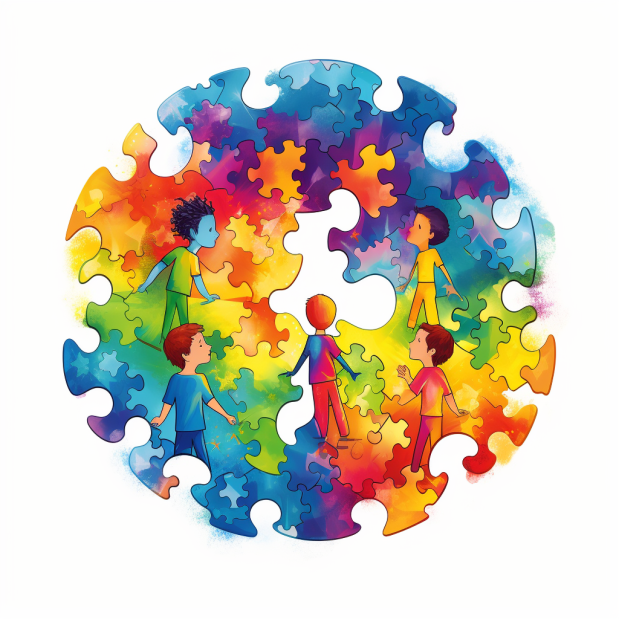
There is a fascinating theory I came across once while reading about autism — the idea that neurodivergent children live outside the realm of reality. That, for them, the world is not a collection of tangible, living things, but rather an abstract creation — something that exists in thought, perception, and interpretation more than it does in the physical sense. At first glance, it sounds strange. How could someone see the world as unreal when they touch it, breathe it, and live within it just as we do? But the more I sat with it, the more I began to understand what the author might have meant.

For many neurodivergent individuals — especially those on the autism spectrum — reality doesn’t always appear in the same format that neurotypical minds interpret. Where we see solid lines, they might see patterns. Where we see order, they might sense chaos. It’s not that their perception is wrong or broken; it’s that it is uniquely wired. Their sensory processing, their interpretation of emotions, their understanding of language and nuance — all of it forms a lens that shapes the way the world is experienced.

Think about it this way: two people can stand in front of a painting. One sees a stormy sea; the other sees a dance of colors and brush strokes that have no form at all. The painting hasn’t changed — the perception has. For the neurodivergent mind, the world can often resemble that painting. It is vivid, full of details, textures, and patterns that the rest of us overlook. Yet, because of how their mind processes those details, the meaning they assign may not align with what we call “reality.”

This isn’t to say neurodivergent children don’t understand that the world is real. They do. They just interact with it differently. Where we might see a table as an object meant for eating, they might notice the way the light reflects off its surface, the sound their fingers make as they tap it, or the slight imperfection in the grain of the wood. Their experience of that table is not confined to function — it is layered, multi-sensory, and often metaphysical in nature.

That word — metaphysical — carries weight. It means “beyond the physical,” and in the case of many on the spectrum, that’s exactly how they experience existence. To them, emotion and sensation can take on shapes, colors, or even sounds. A happy moment might feel blue. A sound might have texture. Words can feel heavy or light. These are not figments of imagination but interpretations of sensory input. What for us seems ordinary can, for them, be an entire universe of meaning.

Society tends to separate “real” from “imagined,” but for the neurodivergent mind, that boundary isn’t always as clear. Their understanding of the world may merge thought and feeling, logic and chaos, all into one seamless experience. It’s not a distortion — it’s a different architecture of consciousness. One that can seem abstract to us because we’re used to neat boxes and clear rules.

I remember reading about one child who described people’s emotions as colors floating around their heads. When someone was angry, he saw red streaks that burned through the air. When someone was sad, he saw shades of gray. Scientists might chalk this up to synesthesia or heightened sensory association, but to that child, this was simply how the world looked. To him, it was not imaginary — it was truth.

And that’s where we, as parents, educators, and onlookers, often miss the mark. We try to pull them “into reality,” assuming they are lost in imagination or fantasy, when in truth, they are processing reality on a plane that is layered, intricate, and deeply personal. To them, the world is both real and symbolic, both physical and emotional, both seen and felt.

This is why communication can sometimes be so difficult. When they describe something in abstract terms — a feeling, a texture, a noise that no one else seems to hear — it’s tempting to dismiss it. But to them, it’s not abstract. It’s part of their lived experience. When they flap their hands or hum repetitively, it might be a way of aligning their senses with the rhythm of the world. When they stare at patterns on the floor or fixate on the flicker of a light, they may be interacting with a reality that feels more structured, more predictable, than the one we impose on them.

We might call our version of reality “real,” but who decides what real means? For some, real is the tactile world — the solid things you can measure and touch. For others, real is what you feel, sense, and connect with emotionally. Neurodivergent individuals often live at the intersection of both. They interpret the unseen currents — the emotions, the sounds, the subtle changes in energy — that most of us tune out.

Perhaps what seems abstract to us is their form of clarity. Maybe what appears confusing to us is, in fact, their version of order. When we say they live outside the realm of reality, maybe what we really mean is that they live in a world we have yet to fully understand.

At the end of the day, perception defines experience. And if neurodivergent children perceive a world filled with patterns, sensations, and unspoken meanings, then that is their truth — their reality. Ours may be grounded in what we can see and measure, but theirs might be built on what can be felt and intuited. Neither is wrong. Both are part of the human experience.

It’s easy to want to “fix” what we don’t understand, but sometimes understanding starts with accepting that not all minds see the world the same way. Some see the invisible connections between things. Some hear the rhythm of existence in ways the rest of us never could.

And maybe that’s the beauty of it all — that reality is not one thing, but many perspectives woven together.

So if a neurodivergent child lives outside your idea of reality, maybe it’s not that they are lost — maybe they are simply exploring a part of it you haven’t seen yet.

And that’s perfectly okay. It’s okay to see differently.