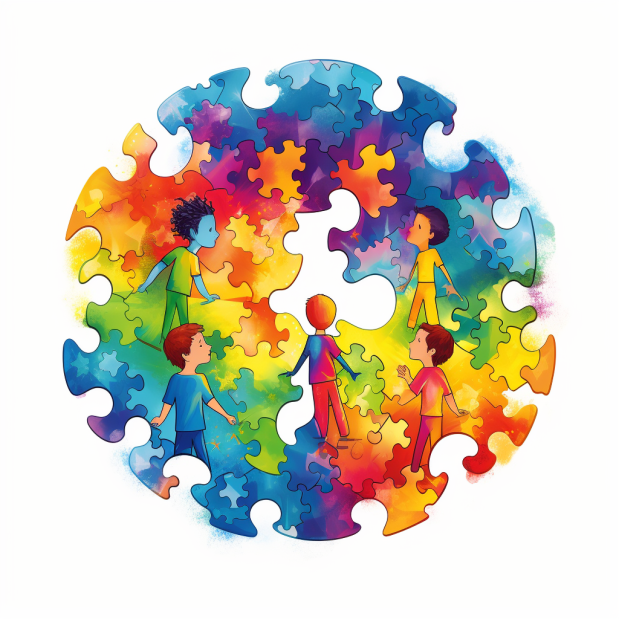

The Inquisitive Mind of Neurodivergent Individuals
I tell my kids all the time that everyone is free to make any choice they wish. Every single one. The world doesn’t stop you from choosing—what it does is hand you the consequence that comes after. And consequences aren’t always punishments; they’re simply results. Some are good, some are bad, and some are the kind you don’t quite know how to label yet. You can make the best possible choice with the best intentions and still land in a situation where someone feels offended, frustrated, or confused. You can walk across a parking lot to help a stranger pick up something they dropped and still be met with annoyance instead of appreciation. But I still tell my kids: That’s a good consequence. Because you did the right thing. You helped where others wouldn’t. You chose kindness, and kindness is never wasted.
Now, in our world—our family world—this conversation takes on a different weight. Neurodivergent individuals often experience choices through a lens most people never even realize exists. Their minds don’t just wander; they investigate. They don’t simply react; they analyze. And they don’t accept surface-level reasoning merely because “that’s how people do it.” For them, every choice is part of a logic chain, a personal equation where intention and outcome are processed side-by-side with curiosity, precision, and sometimes blunt honesty.
This inquisitive mindset is one of the greatest gifts they have… but it can also create misunderstandings in a world that rarely takes the time to slow down and see the full picture.
When someone on the spectrum makes a choice, they often rationalize it in ways that make perfect sense to them. If they see a problem, they want to fix it. If they notice someone struggling, they want to help. If something appears inefficient, incorrect, or out of order, their instinct is to correct it. To them, that is the logical and compassionate response. It’s what should happen. But to others—especially neurotypical individuals who follow hidden social rules without ever consciously naming them—those same actions can be seen as intrusive, abrupt, or overly literal.
One of my kids might jump in to “help” with a task I didn’t ask for help with because, in their mind, it is inefficient to let someone struggle alone. Another might correct a statement someone makes because accuracy matters more than social comfort. Another might repeat a question until they receive clarity because uncertainty is far more uncomfortable to them than repetition is to the person answering.
To them, these are logical choices. To us, they sometimes look like interruptions, overreactions, or stubbornness.
So how do we bridge that gap?
How do we teach them that their logic isn’t wrong—it just needs context?
How do we help them understand the difference between helping and hindering without crushing their confidence or dimming their inquisitive spark?
We start with what they already understand: choices have consequences. But we expand that idea into something more nuanced.
In our home, I’ve learned that teaching cause and effect works best when it’s explained, not imposed. Saying “Don’t do that” never works nearly as well as sitting down and breaking apart the why behind the reaction. Neurodivergent minds thrive on clarity. They thrive on explanations that connect A to B to C in a way that feels fair and structured.
So instead of saying, “You shouldn’t correct someone like that,” we say:
“When you correct someone abruptly, even if you’re right, the other person might feel embarrassed. That embarrassment becomes part of the consequence. It doesn’t make your information wrong—it just means the timing and delivery changed the outcome.”
Or:
“When you rush to help someone who hasn’t asked for help, the consequence might be frustration on their part. Not because your intention was bad, but because they weren’t ready for support.”
Or my personal favorite:
“You can still do the right thing, but sometimes the right thing includes understanding what the other person needs—not just what you see.”
This approach gives them something solid to hold onto. It doesn’t punish their curiosity or their logic. It builds social understanding the same way you’d teach a math formula or a science concept: step by step, with examples and patterns they can recognize.
The truth is, many neurodivergent individuals navigate the world without the unspoken rulebook the rest of society relies on. They don’t guess social norms—they observe them, decode them, test them, revise them. And when something doesn’t make sense, they question it. Not out of defiance, but out of genuine curiosity.
That inquisitive mind is their strength. It’s the engine behind their creativity, their problem-solving, their honesty, and their unique view of the world. But like any powerful engine, it works best when guided—not controlled, not suppressed, but guided.
Our job as parents, caregivers, friends, and allies is to help them see that choices are not just about logic. They are about connection. They are about understanding how their actions ripple outward and how those ripples affect the people and environments around them. Not to limit them, but to empower them with a fuller picture—the one the rest of the world often takes for granted.
And as they learn this, something incredible happens. Their choices become not just logical, but insightful. Not just helpful, but empathetic. Not just inquisitive, but deeply aware.
That is the beauty of the neurodivergent mind.
It is curious.
It is analytical.
It is compassionate in its own structured, thoughtful way.
And when we take the time to teach—not correct, not shame, but teach—they not only understand the difference between helping and hindering… they thrive.
Because at the end of the day, their choices matter. Their minds matter. And the world is a far richer place because they don’t simply accept it as it is—they question it, explore it, and reshape it one curious thought at a time.