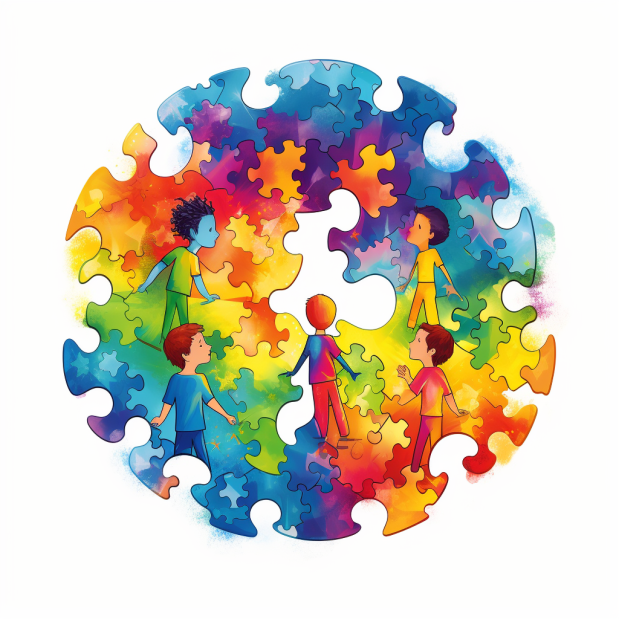

In the tapestry of life, the concept of struggle often feels like an ever-present thread, woven into the narratives we tell ourselves. But is it genuinely a battle, or rather a construct we use to either motivate ourselves or as a shield for our inertia? These reflections echo through our societal understanding of normalcy and the expectations we place upon ourselves.
I’ve always been one to embrace honesty, perhaps to a fault, a trait that extends to my children. Recently, as we drove home from school, I overheard my second oldest and youngest sons engaged in a conversation about their day—an exchange filled with genuine support and guidance for each other. When the topic shifted to the state of our house, amidst the whirlwind of basketball practice, ABA therapy, dinners, and the myriad of responsibilities, I mentioned a need for better cleaning. Unexpectedly, my second oldest chimed in from the backseat, proclaiming, “Well, if you guys weren’t so lazy.” A moment of unfiltered truth that left my wife and me momentarily speechless. It seems my commitment to brutal honesty has made its mark on my children.
Yet, within this struggle, there is a positive aspect. Similar to stress, where there’s good stress and bad stress, the challenges we face can be reframed. Society tends to label anything deviating from the plan as bad stress or a struggle, attempting to define what is “normal.” However, the very idea of normality is a construct with no set standards. We impose this notion on ourselves in an attempt to categorize our existence. But what if, instead of striving for an elusive normal, we celebrated our differences?
The truth is, there is no universal “normal.” Embracing diversity in ideas, codes, ethics, and morals is what propels society forward. My children, who don’t fit the societal mold of normal, teach me that embracing one’s uniqueness is a strength, not a weakness. They live outside the box, offering perspectives and understanding that we, at times, underestimate.
So, when people inquire about my well-being, I respond with, “Just another day in paradise.” Why? Because, in the grand scheme, wherever life takes us next has to be better, and I’m relishing the journey.
Consider the phrase: “Reality is based on the perception of reality.” Our perception, molded by societal teachings and trends, shapes our reality. But what if we altered our viewpoint? Could our reality shift? The answer is a resounding yes. Autism, a reality often misunderstood, should not be degraded but embraced. The clarity of perspective that individuals on the spectrum offer is profound and deserves recognition.
In essence, our children, especially those on the spectrum or with special needs, are better for not conforming to society’s arbitrary norms. Their uniqueness is a gift, and we should join them in their world—an extraordinary place that offers a far richer experience than ours.
Until the journeys end, my friend!