
(A reflection on learning to wait, listen, and understand in moments of silence and confusion when raising or working with neurodivergent individuals.)
There is a moment — that fleeting second between action and understanding — where everything either falls apart or falls into place. For most families, this pause may feel insignificant: a child takes too long to respond, a question goes unanswered, or an emotion surfaces in a way that seems out of sync with the world around it. But for those of us raising or working with neurodivergent individuals, that pause holds everything. It’s where growth happens. It’s where love learns patience.
Every neurodivergent child, and even adult, experiences the world at their own tempo. Some move faster in thought but slower in expression. Others live in a world so vivid that reality feels like static interference they must tune out just to function. For parents and caregivers, this difference in pace can feel like a test of endurance — an emotional marathon of waiting, repeating, reassuring, and relearning what communication really means.
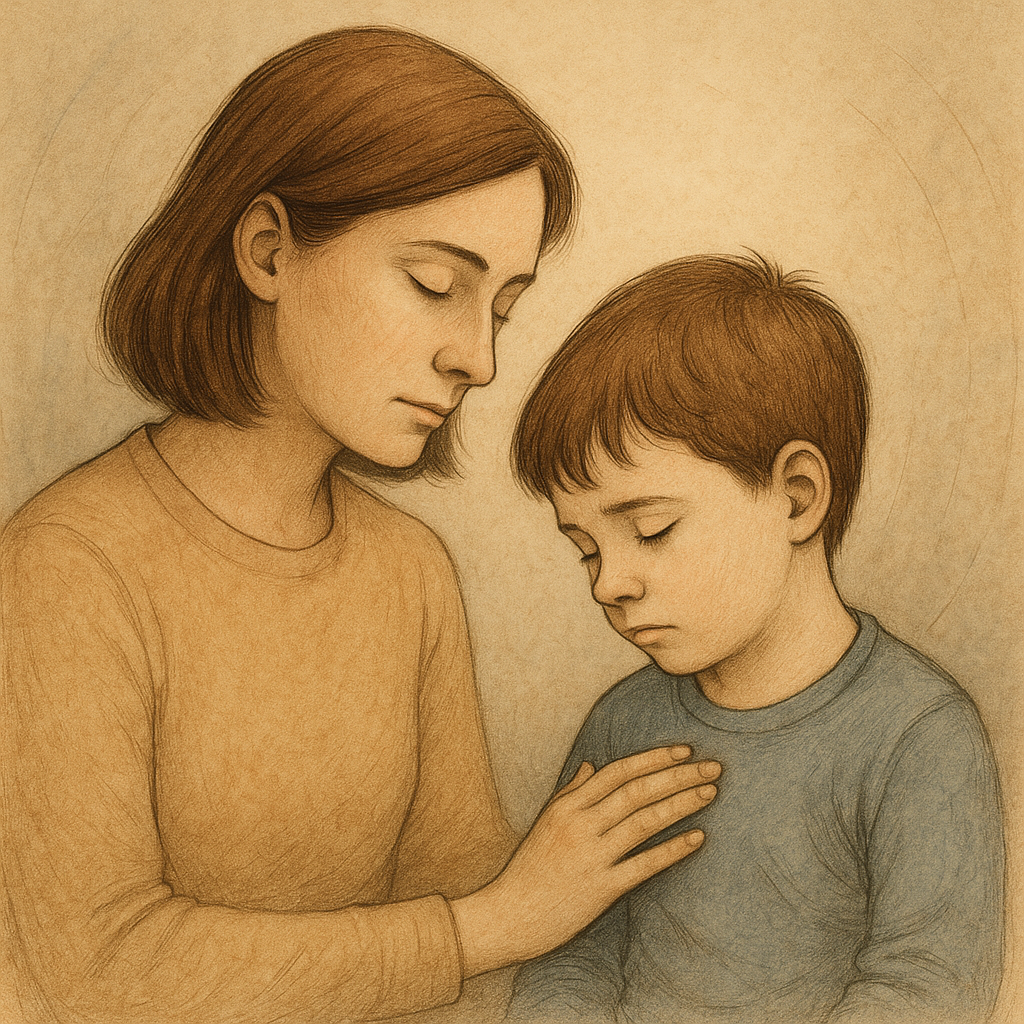
I’ve often found myself standing in that uncomfortable space — the pause. My son may be trying to find the words for what he feels but can’t express. My daughter may be processing a change I didn’t even think was significant. And there I stand, tempted to rush in, to fill the silence, to fix the discomfort. But over the years, I’ve realized that patience isn’t just waiting — it’s trusting the process of the pause. It’s believing that they will get there, in their own time.
That pause is where understanding begins.
We, as neurotypical caregivers or parents, are conditioned to respond to speed. Society measures progress by output — how quickly a child learns, how fast they respond, how soon they reach “normal” milestones. But neurodivergent minds don’t measure growth in the same way. Their victories are quieter, often invisible at first, and sometimes even misunderstood. What looks like avoidance may be internal processing. What seems like defiance may be self-preservation. What we interpret as silence may, in fact, be the loudest moment of thought they’ve had all day.
Patience, then, becomes more than a virtue — it becomes a lifeline.
When we learn to wait, truly wait, something beautiful happens. We begin to notice the subtle cues — the shift of an eye, the soft hum that signals comfort, the small gesture that means “I’m trying.” These are their languages. And just as we wouldn’t rush someone learning to speak a foreign tongue, we mustn’t rush them learning to express in their own. They are not broken. They are translating life in real time.
I remember one night sitting quietly beside my nonverbal son. He was lining up toys in perfect rows, something he does when he’s overwhelmed. My instinct was to redirect him, to encourage “play” the way I understood it. But I stopped myself. Instead, I just watched. There was a rhythm to it — a story unfolding through placement and color. That was his peace, his control in a world that often feels unpredictable. My patience, my silence, allowed me to see his world through his eyes. And in that moment, he looked up, smiled, and handed me a toy. It was his way of saying, “You understand.” That one gesture meant more than a thousand spoken words.
Patience teaches us to listen without needing to respond. It teaches us that not every situation requires correction, and not every silence needs filling. Sometimes the most healing thing we can do is be there — present, calm, and consistent. Because when they look back at us in confusion or fear, they’re not seeking solutions; they’re seeking reassurance that they’re safe to just be.
But patience doesn’t come easy. It demands humility — the acceptance that we don’t always have the answers, that progress might not look the way we imagined. It requires us to unlearn the urge to “fix” and instead lean into the art of “accepting.” And acceptance, when paired with patience, becomes the soil where trust grows.
There will always be days when patience feels impossible. When meltdowns erupt over things we can’t predict or control. When the world’s noise collides with their sensory overload, and we’re standing there trying to bridge two realities that don’t quite align. In those moments, remind yourself: this is not a failure. This is a pause. A moment between chaos and calm where your steadiness can guide them home.
Patience is the heartbeat of understanding. It’s what turns frustration into empathy, exhaustion into endurance, and confusion into compassion. When we embrace patience — not just as a behavior, but as a mindset — we open the door to a deeper kind of love. One that doesn’t demand change but celebrates connection.
So, the next time you find yourself in that pause — between question and response, between emotion and explanation — don’t rush it. Breathe. Wait. Watch. Trust that something beautiful is unfolding, even if you can’t see it yet.
Because sometimes, the most profound moments of growth don’t happen in the noise of doing…
They happen in the quiet grace of waiting.