

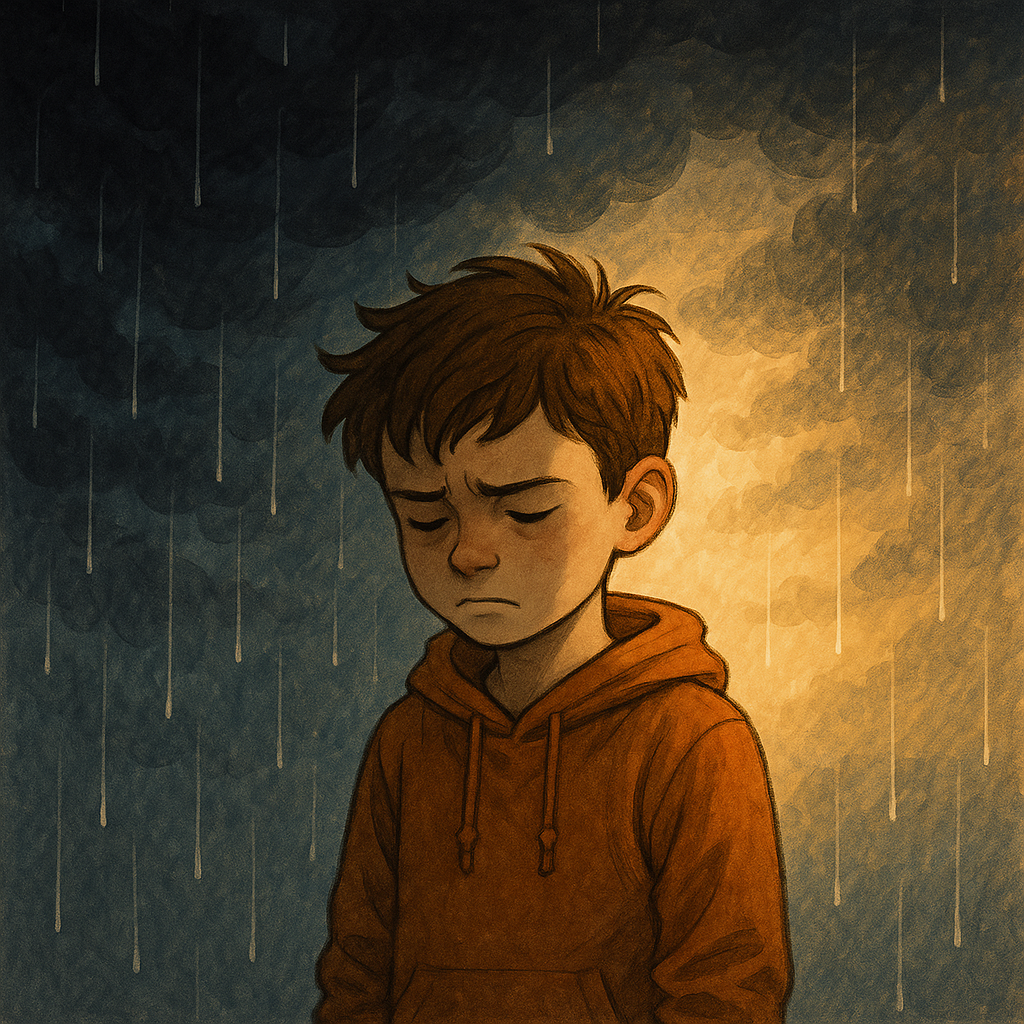
Punishment. It’s one of those words that sends a shiver down any parent’s spine—especially when it comes to raising a neurodivergent child. It’s not about fear or anger, but about uncertainty. What do you do when your child, who has the cognitive ability to understand right from wrong, suddenly lashes out, says something hurtful, or does something destructive—then later, with tears in his eyes, says he’s sorry?
This is something I wrestle with often, particularly with my son. He’s bright—brilliant even. He can hold conversations, build things, and even teach me things at times. But there are moments when it’s as if a switch flips inside him. One minute, he’s calm and reasoning; the next, it’s as though the floodgates have burst open. The emotions come rushing out faster than his brain can sort them. Logic disappears, replaced by pure reaction—sometimes anger, sometimes fear, sometimes chaos. Then, hours later, he’ll sit quietly and apologize, almost confused by his own behavior.
It always leaves me asking the same question: Did he really understand what he was doing, or was he lost in the storm of his own mind?
The Dual Reality of Cognition and Emotion
Neurodivergent children who possess cognitive awareness often live between two worlds. In one, they have the intelligence and reasoning skills to process consequences, rules, and empathy. In the other, their emotional regulation and sensory processing systems can betray them in an instant. When they become overstimulated, their brain shifts gears. Rational thought—the part that weighs right and wrong—can get hijacked by the limbic system, the brain’s emotional command center.
This is why punishment, in the traditional sense, rarely works. It assumes the child chose to misbehave with full understanding and control. But what if, in that moment, their control simply vanished?
That’s where the line becomes blurred—and where our role as parents shifts from disciplinarians to detectives.
The Detective Approach: Understanding the “Why” Behind the Behavior
When my son has an outburst, the immediate question is not What did he do? but Why did it happen?
Here are a few techniques I’ve learned to help distinguish between conscious choice and cognitive overload:
- Observe the Triggers
Keep a simple mental or written log of what was happening before the behavior occurred. Was there loud noise? Was he hungry, tired, or anxious? Did something unexpected disrupt his routine? Patterns often emerge that point toward sensory or emotional overload rather than willful misbehavior. - Gauge the Reaction After the Incident
If your child shows genuine remorse, confusion, or exhaustion after an outburst, that’s often a sign that they weren’t acting with full awareness. True defiance typically lacks remorse—it comes with justification or even satisfaction. The child who regrets what happened often didn’t have control at the time. - Assess the Consistency of the Behavior
If the same behavior keeps happening in similar situations despite repeated guidance, it may be less about intent and more about inability. Neurodivergent children often know what they should do but can’t access that knowledge when overwhelmed. - Engage in Calm Reflection Time
After the storm passes, talk—but only when everyone is calm. I sit with my son, sometimes in silence first, and then we go over what happened. I ask gentle questions like, “What were you feeling before that happened?” or “Did it feel like you couldn’t stop it?” His answers give me insight into how much control he had in the moment.
Rehabilitative Measures Over Punishment
Punishment, by nature, focuses on consequences. But rehabilitation focuses on growth—and that’s where true change happens. Here are a few approaches that have helped bridge the gap between understanding and self-control:
- Reflective Discussion Instead of Time-Outs
Instead of sending him to his room, I’ll sit beside him and talk about what went wrong once he’s calm. We walk through the emotions, not just the actions. “What could you have done differently?” or “What can we try next time you feel this way?” - Sensory Reset Zones
We’ve created a quiet area—a kind of emotional “cooling station.” When he feels overwhelmed, he can go there voluntarily. It’s not a punishment zone; it’s a safe zone. Soft lighting, a blanket, noise-canceling headphones—it’s amazing what a sensory break can do. - Natural Consequences Over Imposed Ones
If he breaks something, the consequence is helping fix it or replace it. This builds accountability without shame. It teaches that actions have effects while still honoring his emotional struggles. - Reward Reflection, Not Just Behavior
When he takes ownership of his actions or expresses awareness of his feelings, I praise that heavily. “I’m proud of you for realizing that,” carries more long-term impact than “Don’t do that again.”
Recognizing When They Truly Do Know
Of course, there are times when our children absolutely do know what they’re doing. They’re testing boundaries, seeking control, or even mimicking behaviors they’ve seen. When that’s the case, gentle but firm boundaries are essential.
The key difference is intent. If your child looks you in the eye, argues, and doubles down—fully aware of your expectations—that’s a learning opportunity. In those moments, appropriate consequences (loss of privileges, extra chores, etc.) are not just fair but necessary. The trick is to keep them connected to the action: “You chose to throw your toy, so now we need to earn it back by showing you can handle it.”
Even then, the goal isn’t punishment—it’s guidance. It’s about helping them connect the dots between choice and consequence in a way that feels safe and constructive.
The Afterthoughts of the Heart
Later, when my son apologizes, there’s a heaviness in his tone that breaks me a little each time. It’s not manipulation—it’s remorse. That’s when I know the teaching moment has to be about empathy, not discipline. Because deep down, I don’t want him to fear punishment; I want him to understand himself.
There’s a profound truth I’ve learned through this journey: understanding always outlasts punishment. One builds trust, the other builds walls.
So, when he has his “moments,” I take a deep breath, remind myself that growth is not linear, and meet him where he is. Because the goal isn’t perfection—it’s progress. And sometimes progress looks like recognizing when the storm inside them isn’t defiance, but simply a mind and heart overwhelmed by the world.