Understanding the Line Between Choice and Overwhelm

Punishment. It’s one of those words that sends a shiver down any parent’s spine—especially when it comes to raising a neurodivergent child. It’s not about fear or anger, but about uncertainty. What do you do when your child, who has the cognitive ability to understand right from wrong, suddenly lashes out, says something hurtful, or does something destructive—then later, with tears in his eyes, says he’s sorry?

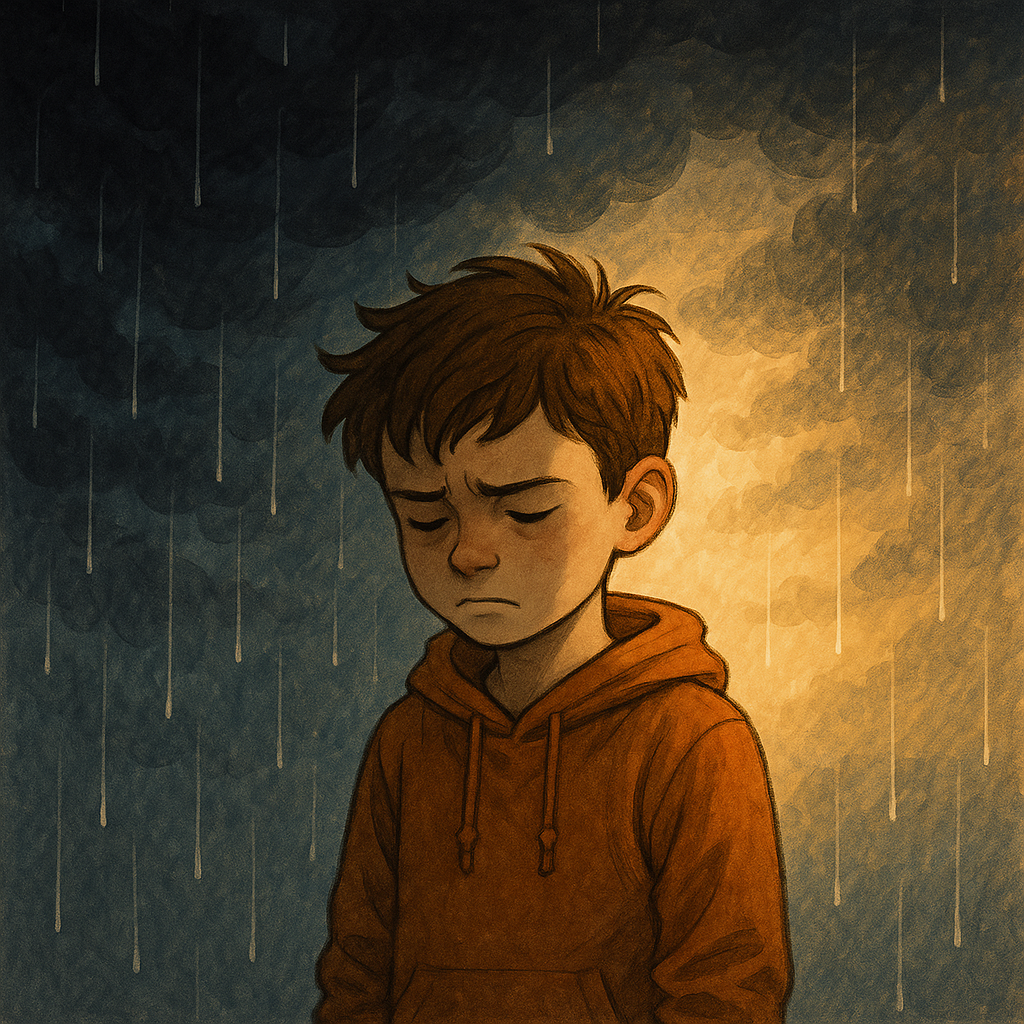
This is something I wrestle with often, particularly with my son. He’s bright—brilliant even. He can hold conversations, build things, and even teach me things at times. But there are moments when it’s as if a switch flips inside him. One minute, he’s calm and reasoning; the next, it’s as though the floodgates have burst open. The emotions come rushing out faster than his brain can sort them. Logic disappears, replaced by pure reaction—sometimes anger, sometimes fear, sometimes chaos. Then, hours later, he’ll sit quietly and apologize, almost confused by his own behavior.

It always leaves me asking the same question: Did he really understand what he was doing, or was he lost in the storm of his own mind?

The Dual Reality of Cognition and Emotion

Neurodivergent children who possess cognitive awareness often live between two worlds. In one, they have the intelligence and reasoning skills to process consequences, rules, and empathy. In the other, their emotional regulation and sensory processing systems can betray them in an instant. When they become overstimulated, their brain shifts gears. Rational thought—the part that weighs right and wrong—can get hijacked by the limbic system, the brain’s emotional command center.

This is why punishment, in the traditional sense, rarely works. It assumes the child chose to misbehave with full understanding and control. But what if, in that moment, their control simply vanished?

That’s where the line becomes blurred—and where our role as parents shifts from disciplinarians to detectives.

The Detective Approach: Understanding the “Why” Behind the Behavior

When my son has an outburst, the immediate question is not What did he do? but Why did it happen?
Here are a few techniques I’ve learned to help distinguish between conscious choice and cognitive overload:

  1. Observe the Triggers
    Keep a simple mental or written log of what was happening before the behavior occurred. Was there loud noise? Was he hungry, tired, or anxious? Did something unexpected disrupt his routine? Patterns often emerge that point toward sensory or emotional overload rather than willful misbehavior.
  2. Gauge the Reaction After the Incident
    If your child shows genuine remorse, confusion, or exhaustion after an outburst, that’s often a sign that they weren’t acting with full awareness. True defiance typically lacks remorse—it comes with justification or even satisfaction. The child who regrets what happened often didn’t have control at the time.
  3. Assess the Consistency of the Behavior
    If the same behavior keeps happening in similar situations despite repeated guidance, it may be less about intent and more about inability. Neurodivergent children often know what they should do but can’t access that knowledge when overwhelmed.
  4. Engage in Calm Reflection Time
    After the storm passes, talk—but only when everyone is calm. I sit with my son, sometimes in silence first, and then we go over what happened. I ask gentle questions like, “What were you feeling before that happened?” or “Did it feel like you couldn’t stop it?” His answers give me insight into how much control he had in the moment.

Rehabilitative Measures Over Punishment

Punishment, by nature, focuses on consequences. But rehabilitation focuses on growth—and that’s where true change happens. Here are a few approaches that have helped bridge the gap between understanding and self-control:

  • Reflective Discussion Instead of Time-Outs
    Instead of sending him to his room, I’ll sit beside him and talk about what went wrong once he’s calm. We walk through the emotions, not just the actions. “What could you have done differently?” or “What can we try next time you feel this way?”
  • Sensory Reset Zones
    We’ve created a quiet area—a kind of emotional “cooling station.” When he feels overwhelmed, he can go there voluntarily. It’s not a punishment zone; it’s a safe zone. Soft lighting, a blanket, noise-canceling headphones—it’s amazing what a sensory break can do.
  • Natural Consequences Over Imposed Ones
    If he breaks something, the consequence is helping fix it or replace it. This builds accountability without shame. It teaches that actions have effects while still honoring his emotional struggles.
  • Reward Reflection, Not Just Behavior
    When he takes ownership of his actions or expresses awareness of his feelings, I praise that heavily. “I’m proud of you for realizing that,” carries more long-term impact than “Don’t do that again.”

Recognizing When They Truly Do Know

Of course, there are times when our children absolutely do know what they’re doing. They’re testing boundaries, seeking control, or even mimicking behaviors they’ve seen. When that’s the case, gentle but firm boundaries are essential.

The key difference is intent. If your child looks you in the eye, argues, and doubles down—fully aware of your expectations—that’s a learning opportunity. In those moments, appropriate consequences (loss of privileges, extra chores, etc.) are not just fair but necessary. The trick is to keep them connected to the action: “You chose to throw your toy, so now we need to earn it back by showing you can handle it.”

Even then, the goal isn’t punishment—it’s guidance. It’s about helping them connect the dots between choice and consequence in a way that feels safe and constructive.

The Afterthoughts of the Heart

Later, when my son apologizes, there’s a heaviness in his tone that breaks me a little each time. It’s not manipulation—it’s remorse. That’s when I know the teaching moment has to be about empathy, not discipline. Because deep down, I don’t want him to fear punishment; I want him to understand himself.

There’s a profound truth I’ve learned through this journey: understanding always outlasts punishment. One builds trust, the other builds walls.

So, when he has his “moments,” I take a deep breath, remind myself that growth is not linear, and meet him where he is. Because the goal isn’t perfection—it’s progress. And sometimes progress looks like recognizing when the storm inside them isn’t defiance, but simply a mind and heart overwhelmed by the world.
The Worry of Something Wrong

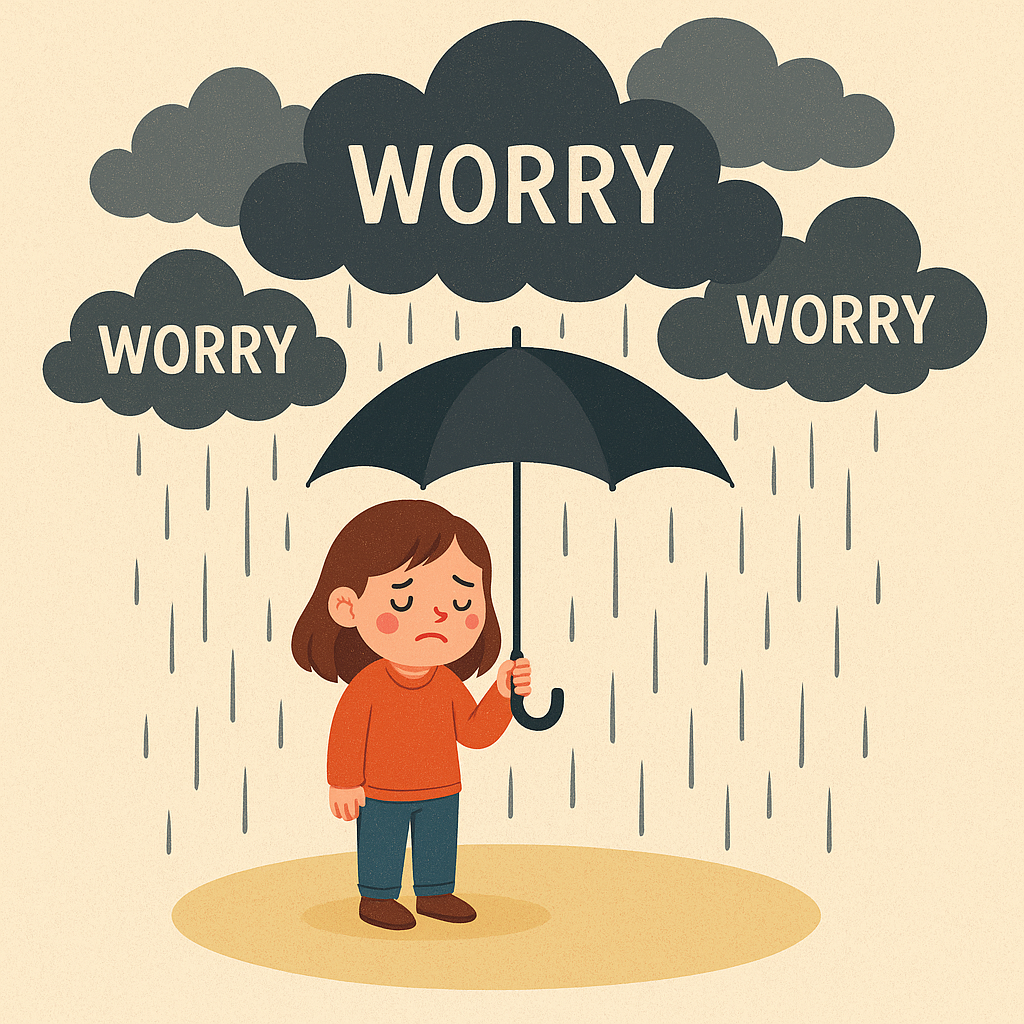
It never ceases to amaze me how deep and complicated the inner world of a neurodivergent child can be. My daughter, for instance, has a pattern that plays out over and over again: no matter what, she worries that something is wrong. It doesn’t matter if she hasn’t done anything, hasn’t said anything, and hasn’t broken any rules—suddenly the tears start flowing, and she bursts into crying.

And of course, as parents, our first instinct is to think, “What did she do?” We go down the list in our heads. Did she break something? Did she get into something she shouldn’t? Did she say something unkind? But after talking to her, the truth always comes out—she did nothing wrong. She’s simply overwhelmed by this persistent feeling that she might have done something, and that’s enough to set her off.

This isn’t the first time I’ve had to walk her through the idea that she has nothing to worry about. I’ve repeated the phrase countless times, “You didn’t do anything wrong, you’re fine.” But interestingly, it doesn’t seem to sink in. No matter how often I say it, she worries. And then she worries about worrying, which just doubles down on the emotion.

For neurodivergent children, this isn’t unusual. Many live with a heightened sense of internal responsibility, almost as if the weight of the world is resting on their shoulders. They may not be able to clearly articulate why they feel the way they do, but the feeling itself is very real to them. To us, it may seem irrational, but in their mind, it’s logical: “If I feel anxious, then something must be wrong. If something is wrong, it must be my fault.”

Why the Worry Persists

Neurodivergent individuals process the world through a different filter. Sometimes, that filter amplifies emotions in ways that are difficult to unravel. Anxiety, guilt, and fear can become default states, even when there is no trigger. For my daughter, the anticipation of something being wrong is so strong that it overrides the evidence in front of her. Logic tells her she is fine, but her heart insists otherwise.

This persistence isn’t about being stubborn or ignoring reassurance—it’s about how the brain processes information. When you or I receive reassurance, our brains file it away as proof: “See? Nothing to worry about.” For neurodivergent children, reassurance may not land the same way. Instead of calming, it sometimes creates a loop: they question the reassurance itself. “But what if I really did do something? What if I just forgot? What if you’re wrong?”

The Ripple Effect

As parents, these moments can catch us off guard. When my daughter bursts into tears, I feel my chest tighten because instinct tells me something serious must be happening. That initial panic can make us react in ways that unintentionally feed the cycle. We press for answers, we ask too many questions, or we show our own frustration. To her, that looks like confirmation that something is wrong. The ripple effect is real—not only for her, but for everyone in the family.

What Can We Do?

The first thing we can do is remember that our children’s emotions are valid, even if we don’t understand them. The worry is real, even if it has no cause. When we validate their feelings, we tell them: “I hear you. I see you. I understand that you’re worried.” That simple validation can sometimes ease the pressure, because they no longer feel alone in carrying it.

Here are some coping strategies that we’ve found helpful, and that might work for others walking the same path:

1. Create a “Nothing Wrong” Ritual.
Repetition doesn’t always sink in the way we hope, but rituals can. A short breathing exercise, a phrase on a sticky note, or even a quick hug and a reminder—“Right now, you are safe. Nothing is wrong”—can help anchor them. Over time, rituals can become trusted touchpoints.

2. Give the Worry a Place.
Sometimes, children need to externalize their worry. Encourage your child to write it down, draw it, or even put it in a “worry box.” Once it’s on paper or placed in the box, it’s no longer floating around in their head. They can see it, name it, and walk away from it for a while.

3. Teach Emotional Labeling.
Instead of saying, “I’m bad” or “I did something wrong,” guide them to say, “I feel worried” or “I feel anxious.” This subtle shift separates their identity from the feeling and makes it easier to work through.

4. Keep Calm Yourself.
It’s easy to let our own worry bleed into theirs, but if we meet tears with panic, we feed the cycle. A calm voice and steady body language reassure far more than a dozen words can. Sometimes, less talking and more presence is the most powerful tool we have.

5. Build Predictable Routines.
Many neurodivergent children thrive on predictability. When the world feels structured, there is less room for “what if something goes wrong?” worries to creep in. Simple routines around meals, bedtime, and school transitions can make a huge difference.

6. Use Stories and Examples.
Children often understand abstract emotions better when we frame them in stories. Share a personal story of when you felt worried even though nothing was wrong, and how you managed it. They’ll see they aren’t alone, and that even adults wrestle with the same feelings.

The Bigger Picture

At the end of the day, my daughter’s worries remind me of how powerful emotions can be. They can’t simply be reasoned away or shut down. They have to be acknowledged, gently redirected, and supported. Our role as parents isn’t to erase the worry—it’s to give our children the tools to face it without being consumed by it.

Yes, the cycle may repeat tomorrow, and the day after that. But each time we practice patience, validation, and coping strategies, we plant a seed. One day, those seeds may grow into resilience. And that’s a future worth worrying a little less about.

To Tell or Not to Tell

As parents of neuro-divergent children, we face a unique and sometimes complicated question nearly every day: How much do we tell them? Life is full of ups and downs—illness, death, money struggles, marital tension, even doubts about faith—and while neurotypical children may absorb these truths with predictable reactions, our children on the spectrum often process them through an entirely different lens. One small detail can set them off into a spiral of worry, while something we thought would devastate them barely registers—until five days later, when it suddenly comes crashing down on their hearts like a tidal wave.

So, what do we tell them? And just as important, what do we hold back?

The Different Vision of the World

Neuro-divergent children see the world differently, and that is both a gift and a challenge. Their lens is sharper in some ways—they notice details most of us overlook, and they often hold a sense of honesty and purity that makes life feel wonderfully straightforward. But that same lens can magnify the painful parts of life. Where we might say, “Grandpa had a spider bite that got infected,” they hear the word infected and spend days worrying about every bug they see. Where we say, “Money is tight right now,” they may lie awake at night fearing we’ll lose our home.

It’s not about sheltering them from the truth entirely—it’s about recognizing that their minds may cling to words, images, or possibilities far longer than ours.

Honesty vs. Overload

The natural instinct is to be honest. After all, trust is the foundation of every relationship, especially between parent and child. But honesty doesn’t mean we have to spill every detail, nor does it mean sharing in the heat of the moment.

For example:

  • Illness or hospitalization: Instead of saying, “Aunt Mary had a heart attack and they don’t know if she’ll make it,” you might simply say, “Aunt Mary is in the hospital, and the doctors are helping her feel better.” This reassures without feeding catastrophic thinking.
  • Finances: Instead of “We can’t afford anything because bills are piling up,” a softer “We’re saving money right now so we can take care of what we need” shifts the focus from fear to purpose.
  • Marital issues: Our children don’t need the blow-by-blow of an argument. A simple, “Mom and Dad don’t always agree, but we love each other and you,” provides stability while acknowledging reality.
  • Faith and doubt: Spiritual questions are deeply personal. If your child asks, it’s okay to say, “I’m still learning and thinking about it too,” instead of downloading every fear or uncertainty you carry.

The key isn’t to lie—it’s to tell the truth in a way they can manage, at a pace they can process.

The Delayed Reaction

One of the trickiest parts is the delayed response. Something you told them last week may seem fine at first—until the fifth day when it clicks. Suddenly, the tears come, the questions start, and the emotions you thought were bypassed rise up in full force.

That’s not failure on their part or ours. It’s processing. Their brains often file away the information, turn it around like a puzzle, and finally land on the emotional weight later. The best way to manage this? Expect it. Leave the door open for questions. When the breakdown happens, be ready with reassurance, not frustration: “I know this feels big now. Let’s talk about it together.”

What They Really Need

At the heart of it, neuro-divergent children crave the same things we all do: stability, love, and reassurance. They don’t need every adult detail of every adult problem. What they need is the confidence that the people who love them are steering the ship.

A few strategies can help:

  1. Simplify the language – Strip away unnecessary details. Keep words short, clear, and reassuring.
  2. Check for understanding – Ask, “Can you tell me what you heard me say?” This helps catch misunderstandings early.
  3. Offer safe anchors – Pair difficult news with constants: “Uncle Joe is sick, but you are safe, we are here, and we’ll help you through it.”
  4. Control the timing – If they’re already overwhelmed, wait until they’re calm before sharing heavier truths.
  5. Model coping – Show them how you handle hard times—prayer, journaling, talking it out—so they see resilience in action.

When Not Telling Is Okay

Sometimes, “not telling” is not about deception—it’s about protection. Your child doesn’t need to know about a financial strain if it won’t directly impact their daily life. They don’t need to hear the worst-case medical scenarios before doctors even know the outcome. They don’t need the unfiltered version of adult conversations that even we struggle to process.

Think of it like this: if sharing the detail will only add weight to their shoulders without giving them power to help, maybe it’s better left unsaid or delayed until it becomes relevant.

Walking the Line

So, to tell or not to tell? The answer is somewhere in between. We tell them enough to build trust, but not so much that they carry the weight of problems far beyond their years. We respect their right to truth, while also respecting their unique way of experiencing the world.

At the end of the day, our children may not need to know everything—but they do need to know one thing with absolute certainty: they are loved, they are safe, and they can trust us to guide them through both the sunshine and the storms of life.

And isn’t that really what parenting is all about?

When Dreams Collide with Reality: Parenting, Neurodivergence, and the Paths We Walk

There are days when the thoughts creep in like a fog—those ever-present, almost dystopian whispers reminding us of the lives we once envisioned for ourselves. Careers that could have soared higher, projects that might have blossomed, hobbies or passions that remain in half-finished notebooks or dusty shelves. For parents of neurodivergent children, these thoughts often feel louder, sharper, and harder to quiet. It is not that our dreams vanish, but rather that they take on new shapes, sometimes stretching so far out of reach that we wonder if they were ever truly ours to hold.

The reality is this: raising neurodivergent children often reroutes our lives in ways we never anticipated. We might have thought success would be measured in promotions, accolades, or financial growth. Instead, our markers of success shift. We start counting victories differently—the first time our child makes eye contact, the day they try a new food, the sound of laughter in a moment when anxiety once ruled. These aren’t the things we dreamed of when we were younger, but they carry a weight, a richness, that can be more rewarding than we ever imagined. Not monetary, not material—but deeply emotional and profoundly psychological.

Still, the question lingers: is it wrong to want those old dreams to come true? Even while navigating the responsibilities that come with neurodivergence, is it selfish to still long for that novel to be finished, that project to see the light of day, that career milestone to be reached?

Here’s an example from my own life. I’ve been working on a project that excites me, something I’ve poured my passion into for quite some time. Every time the house finally grows quiet—everyone settled into their own routines, the chaos stilled—I seize the opportunity. I sit down, ready to make progress. Yet, within minutes, the interruptions begin. A door slams, someone needs help, another crisis erupts. The project gets pushed aside again. And again. And again.

It’s in those moments that the questions arise: am I chasing something that isn’t meant for me anymore? Are these interruptions really life’s way of reminding me that my children, my family, my responsibilities are the greater priority? Is it wrong to give up on my own dreams so that theirs may come to life?

Society doesn’t offer us a clear answer. Some will say sacrifice is the essence of love and parenting. Others insist that to truly serve our families, we must also serve ourselves—that unfulfilled parents risk bitterness that seeps into everything. The truth probably lies somewhere in between.

The balance is elusive, but it is possible. Here are a few coping mechanisms that may help:

1. Redefine success.
Your dreams may not unfold the way you imagined them, but that doesn’t mean they aren’t alive. Instead of a finished book, maybe success right now is writing one page. Instead of a completed project, maybe it’s carving out 15 minutes of uninterrupted time. Success isn’t only measured by the end result; sometimes it’s measured in persistence.

2. Find micro-moments.
Neurodivergent households rarely allow for hours of quiet focus. Instead, seize the small windows. Five minutes here, ten minutes there—it adds up. Keep your tools ready so you can jump in when the opportunity arises. Momentum, however small, is still movement forward.

3. Blend dreams with responsibilities.
Sometimes the path forward is not abandoning your dreams but reshaping them to fit within your reality. Can your children participate in your projects in small ways? Can your work reflect the experiences you’re living as a parent? Integration may help reduce the feeling of “either/or.”

4. Release perfectionism.
One of the greatest weights we carry is the belief that if we cannot do something perfectly, it is not worth doing. That is a lie. A messy, imperfect, half-finished attempt is better than never starting. Give yourself permission to stumble forward.

5. Reframe interruptions.
Yes, they derail your focus. Yes, they are frustrating. But sometimes those interruptions are the very moments you will one day treasure. That unexpected hug, that strange question, that laugh in the middle of your frustration—these are the gems hidden inside the chaos.

At the heart of it, the question isn’t whether it is wrong to pursue your own dreams while parenting neurodivergent children. The real question is whether you can learn to walk both paths at once—the one where your personal passions still matter and the one where your child’s needs come first. These paths don’t have to be mutually exclusive. They are parallel roads, and sometimes they intersect in surprising, beautiful ways.

Perhaps the balance isn’t about sacrifice versus selfishness at all. Perhaps it is about acceptance—that your dreams may take longer, may look different, may evolve alongside your child’s journey. And in that evolution, they may grow into something far richer than the original vision ever promised.

Because here’s the truth: even if your old dreams remain unfulfilled, your new path—the one paved with resilience, patience, humor, and unconditional love—can be more rewarding than anything you once imagined. It may not be the life you planned, but it can still be a life of deep meaning, where joy lives side by side with sacrifice.

And maybe, just maybe, that’s the dream worth chasing after all.

The Business of Life

Life doesn’t slow down. The business of daily routines, schedules, deadlines, and expectations keeps moving forward whether we like it or not. For those of us who are not on the spectrum, it often feels like we’re sprinting through an endless to-do list: work, errands, school runs, bills, dinner, repeat. Yet for neurodivergent individuals, life can move at an entirely different pace. Sometimes it slows down to a crawl, and sometimes it even comes to a complete stop. That doesn’t mean they’re “stuck” or unable to process the world—it means they are processing differently.

I’m reminded of this every day, especially when I look at my oldest son. He is non-verbal, hums and stims almost constantly, and yet he’s one of the most fun people to be around. His personality shines through his actions, his routines, and the quiet but strong way he communicates. Take mornings, for example.

Like most of us, he would rather stay asleep when the alarm goes off. He’ll roll over, pull the covers back over his head, and claim a few more minutes of peace. Eventually, he gets up and goes through his usual rhythm: eat, get dressed, and either walk around the house or play on his computer. This is his “business of life,” the structure he knows and expects.

But not every day is the same. This morning, his routine took a detour. After breakfast, instead of moving on to the next step, he went right back to bed. I asked if he was going to get up, and with a simple sign he told me, “No.” That was his answer, firm and final. I left the light on and the door open, hoping he might change his mind. A few moments later, I heard the door slam. That was his way of telling us all: I’m done for now. I’m not dealing with the world today.

And you know what? That’s okay.

This moment taught me something important: while I might feel the pressure of life moving forward—work deadlines, responsibilities, places to be—he has the wisdom to stop when he needs to. He has the ability to say, “Not right now,” even if the only way he can express it is through closing a door. It’s not avoidance or laziness. It’s his way of processing the world at his own pace.

Why Slowing Down Matters

For neurodivergent individuals, overstimulation is real. The constant noise, lights, expectations, and transitions that many of us push through without much thought can feel overwhelming. Imagine trying to juggle a hundred puzzle pieces at once while everyone around you is telling you to hurry up and finish. That’s what everyday life can feel like.

When my son chooses to shut the world out for a while, he’s not giving up. He’s recalibrating. He’s giving his brain and body the space they need to restore balance before stepping back into the current of life. And truthfully, we could all learn something from that. How many times have we pushed ourselves past exhaustion just to meet expectations? How many times have we ignored our own need to pause because “life doesn’t slow down”?

Letting Them Process Their Way

One of the hardest things as a parent is balancing the business of life with the needs of our children. We want to keep moving forward. We want to get things done. But when we force them to move at our pace, it usually ends in frustration—for them and for us. The better approach is to recognize their signals, respect their process, and adjust where possible.

Here are a few tips that I’ve found helpful:

  1. Respect the Pause.
    If your child says “no” to the world, listen. Giving them 10 or 20 minutes to regroup often prevents a meltdown later. It’s an investment in peace.
  2. Maintain Predictability.
    Routine provides security. Even if their pace slows, keeping the order of events (wake up, eat, dress, activity) gives them a sense of stability.
  3. Offer Gentle Reminders, Not Demands.
    Instead of “You need to get up now,” try “Breakfast is ready, and I’ll be in the kitchen when you’re ready.” This gives them choice while still reminding them of what’s next.
  4. Create Safe Spaces.
    Sometimes they just need a quiet room, a weighted blanket, or a familiar corner of the house to feel calm again. Build those safe spaces into your home.
  5. Don’t Take It Personally.
    A slammed door isn’t defiance—it’s communication. It’s their way of telling you they’re not ready yet.

The Business of Life, Reimagined

The truth is, life doesn’t stop for us. There are still jobs to do, meals to cook, and bills to pay. But when you’re raising a neurodivergent child, you learn that life can slow down—and sometimes it should. In fact, those pauses are part of the business of life, not interruptions to it.

My son teaches me this daily. His hums, his stims, his quiet refusals—all of it is part of his way of engaging with the world. It may not look like mine, but it’s just as valid. And when I respect that, I find that my own stress is lighter. Instead of battling to keep him on my timeline, I can appreciate his.

So the next time life feels like it’s racing ahead, remember this: slowing down isn’t failure. For neurodivergent individuals, it’s survival. And for the rest of us, it might just be the reminder we need that sometimes the best way to handle the business of life is to stop, breathe, and let things unfold at their own pace.

Because in the end, life isn’t just about racing to the finish line. It’s about walking alongside one another, even if the pace is different.

The Emotional Weight of Neurodivergence

Emotions are powerful things. For most of us, we learn to regulate them as we grow. We recognize that while fear, worry, and grief have their place, they don’t need to take over every waking moment. For neurodivergent individuals, however, emotions don’t always follow that same path. They can be bigger, heavier, and all-consuming. What feels like a passing concern for one person may be an overwhelming storm for another.

This truth came into sharp focus for our family recently.

My youngest son’s grandfather was bitten by a spider. At first, it didn’t seem like anything unusual, but after some time the bite wouldn’t heal. The hand began to swell, and eventually, the doctors determined it was becoming septic. Surgery was required, followed by several days in the hospital to ensure the infection didn’t spread further.

For most people, the response would be measured: concern, yes, but with the understanding that the doctors had things under control. For my son, though, this was not something he could just sit with. The word “septic” became a trigger. It carried connotations of death, decay, and danger. In his mind, it didn’t matter that the doctors said his grandfather was stable—it didn’t matter that the procedure was routine—he needed to be there. Not just near the hospital. Not just in the waiting room. He needed to be beside his grandfather every step of the way. He asked about updates every five minutes, sometimes more, as if missing one detail could mean losing someone he loves.

The stress became all-encompassing. His schoolwork? Forgotten. Meals? Barely touched. Hobbies that usually kept him engaged? Pushed aside. His entire thought process narrowed to one point: “What is happening with Grandpa?”

This is something that happens often with neurodivergent individuals. Their emotions don’t just rise and fall—they engulf. Logic, routine, even comfort from loved ones may not break through when their mind locks on to a crisis. And while it might seem “over the top” to outsiders, to them it is very real, very urgent, and very debilitating.

As parents, this creates a challenge. On one hand, we want to support their emotional expression. They care deeply, and that compassion is a strength. On the other hand, when those emotions spiral so far that they shut down everything else, we need to find ways to bring balance.

One of the first lessons we’ve learned is to pay attention to language. Words like “septic” or “infection” may seem clinical and straightforward to adults, but to a child on the spectrum, those words can carry frightening weight. They attach vivid, sometimes catastrophic meanings to them, and that one word can set off days of worry. This doesn’t mean we hide the truth, but it does mean we must choose our words carefully. “The doctors are helping Grandpa’s hand heal” carries a very different impact than “his hand is septic.”

It’s also important to recognize when emotions have crossed from caring into debilitating. In our son’s case, checking in every few minutes wasn’t about gathering information—it was about trying to manage an anxiety he couldn’t regulate. That level of stress meant he couldn’t engage in anything else, shutting down his usual coping strategies.

So what do we do as parents when this happens?

First, we acknowledge. Pretending nothing is wrong or dismissing his feelings with “Don’t worry, he’ll be fine” doesn’t help. He knows something serious is happening, and his mind won’t let go of it. Acknowledgment lets him know we see and hear his concerns.

Second, we redirect gently. This doesn’t mean forcing him to stop asking questions, but rather helping him find outlets to release that anxiety. Sometimes it’s drawing how he feels. Sometimes it’s writing a letter to his grandfather. Sometimes it’s sitting together and creating a “worry box” where he can place notes about his fears, symbolically setting them down for a while.

Third, we maintain routine where we can. Routine is often the anchor that keeps neurodivergent individuals grounded. Even when they can’t stop worrying, keeping bedtime consistent, meals predictable, or a favorite activity available gives them touchpoints of stability in the storm.

Lastly, we remind ourselves—and him—that caring so deeply is not a flaw. It’s a part of who he is. The world often tells neurodivergent individuals that they are “too much”—too sensitive, too intense, too reactive. But that depth of emotion is also what makes them empathetic, creative, and uniquely connected to those around them. Our job is not to strip that away but to help guide it so it doesn’t consume them.

Watching my son cycle through such intense worry over his grandfather reminded me of how differently neurodivergent minds process stress. To me, the situation was concerning, but manageable. To him, it was the only thing that mattered. His love and worry consumed every part of his thought process until it left no room for anything else.

As parents, we can’t always prevent that flood of emotions. What we can do is walk beside our children through it. We can choose words with care. We can help them build tools to release their fears. We can provide anchors of routine. And most importantly, we can remind them that their big emotions come from a place of love—a love that is fierce, loyal, and unshakable.

That love may overwhelm at times, but it is also a gift. It means when our children care, they care fully. And even in the hardest moments, that depth of emotion is something worth cherishing.

Always Watching, Always Learning

It’s easy to assume that our neurodivergent children aren’t paying attention. Sometimes they seem lost in their own world, focused on things that most people would pass over, or appearing completely tuned out while the rest of the family bustles around. But if there’s one thing life keeps reminding me—it’s that they are watching. Always.

Just the other day we had one of those family reset days—cleaning the house top to bottom, getting everything in order before fall rolled in. With colder weather on the horizon, we spend more time indoors, and nothing makes life more stressful than tripping over clutter. So, we worked as a team, moving furniture, picking up, wiping down counters—really making the space feel like a home ready for the new season.

When we finally collapsed into bed that night, I felt proud. Everything had its place. We had cleared not just the floor, but the mental fog that clutter often brings.

The next morning, my wife and I woke up late. The kids had gotten up before us, fixed their own breakfast, and were happily carrying on with their morning routine. As I stumbled into the kitchen, rubbing sleep from my eyes, I spotted it—the glaring detail that broke the perfect picture.

An empty cereal box. Sitting smack in the middle of the counter.

I asked, “Who left this here?”

One of the kids looked at me matter-of-factly and said, “What? That’s where we leave everything until we want to throw it out.”

Before I could react, my wife chimed in with a sheepish laugh, “Ooops.”

It hit me like a lightning bolt. That’s her habit. She has a way of setting things on the counter “for later,” which happens to be one of my pet peeves. And sure enough—our children, who so often seem disengaged, had been watching closely enough to pick up her system. To them, it wasn’t laziness or forgetfulness. It was simply the way things are done in this house.

I didn’t get upset. In fact, I couldn’t help but smile. Because this moment proved something profound:
Our children are always absorbing. Always learning. Always paying attention, even when we think they aren’t.

For neurodivergent individuals—especially those on the autism spectrum—this observation may look different than what we expect. They may not respond right away, or they may not appear to be engaged, but make no mistake—they are cataloging. They are noticing. They are connecting dots in ways that sometimes catch us off guard.

This is why modeling behavior is so important. We often talk about teaching by example, but it goes deeper than that. Every habit, every word, every shortcut we allow ourselves becomes part of the blueprint they use to navigate their world. If “cereal boxes on the counter” is what they see, then that’s the system they’ll replicate. If kindness is what they witness, kindness is what they’ll learn. If perseverance is what we show, perseverance is what they’ll practice.

And isn’t that a hopeful thought?

Even in moments when it feels like our children are far away in their own universe, they are tethered to ours by threads of observation. They see us at our best and our worst. They hear the sighs, the laughter, the small remarks we don’t think twice about. They are learning how to manage life—not by the lectures we give, but by the lives we live in front of them.

That’s both humbling and empowering. It means we don’t need to be perfect, but we do need to be intentional. Our children, neurodivergent or not, will build their worldviews around what we consistently show them.

So next time you catch yourself thinking, They’re not even paying attention, remember the cereal box. Remember that they are watching. Remember that your everyday habits are teaching lessons you may not even realize.

And when you stumble—and you will—don’t panic. Show them grace, show them honesty, and show them how to reset. Because those lessons matter just as much as the tidy house or the “right way” to put away breakfast.

At the end of the day, our children are not simply existing alongside us. They are learning how to live by watching us live. And that is both the greatest challenge and the greatest joy of being their parent.

The Chaos Moment

We all know what chaos feels like. It sneaks up on us, starting small—spilled milk, a dropped toy, or a forgotten homework assignment—and suddenly the whole room feels like it’s about to implode. Voices rise, patience runs thin, and something that wasn’t a big deal becomes the spark for an emotional wildfire.

Why does this happen? Why do we sometimes react so strongly to such minor moments? The truth is, it’s not the granola bars or the spilled milk. It’s the accumulation of stress, worry, and expectations that we all carry, especially when raising children who are neurodivergent.

Let me tell you about one of those chaos moments in our home.

My daughter, who is autistic, has a hard time asking for help. For her, asking for help feels like admitting defeat. So instead, she pushes herself to try and try, even when something is just out of reach. This time, it was the box of granola bars on the top shelf. She stretched, grabbed, wiggled, and tugged until finally the box tipped over and granola bars scattered across the kitchen floor.

To me, it wasn’t a catastrophe. No one was hurt. Nothing broke. It was just a box of granola bars that now needed to be picked up. But before I could even respond, the room erupted.
“Why can’t you just ask for help?”
“What are you doing?”
“Not again!”

It wasn’t the first time this had happened. Honestly, it was probably the fifteenth. Her siblings, also on the spectrum, joined the chorus, and what started as a small mess became a storm of frustration.

Here’s the kicker: was the problem really the granola bars? Or was it that she wanted to do it herself? Maybe she was reaching because she didn’t want to feel “less than.” Maybe she was pushing through because independence, even in small things, matters so much more when you often feel different from the world around you.

That’s the heart of autism in our home. Small things often carry big weight. Asking for help isn’t just about reaching the granola bars—it’s about pride, independence, and the struggle of admitting vulnerability. And on the flip side, the reaction from her siblings wasn’t just about the mess. It was about overstimulation, routine being disrupted, and the heightened emotions that come when the world already feels unpredictable.

That’s why the chaos moment is so tricky. We aren’t just responding to the event; we’re responding to all the emotions behind it.

Why Do Chaos Moments Trigger Us So Much?

  1. Accumulated Stress
    When you live in a home where daily routines are often disrupted by meltdowns, sensory overload, or repeated patterns of behavior, your patience can wear thin. By the time the granola bars hit the floor, you’re already carrying the weight of ten other challenges.
  2. Expectations Colliding with Reality
    We expect our kids to “learn” after repeated experiences. When they don’t, frustration builds. But for autistic children, repetition doesn’t always lead to a changed behavior. Sometimes the need for independence or the pull of a sensory preference overrides logic.
  3. Emotional Contagion
    One person’s meltdown often sets off others, especially when multiple children on the spectrum are involved. What feels like a small spark spreads quickly through the whole family.

So, What Do We Do?

The real challenge is not in preventing these moments—they’re going to happen—but in how we respond to them. Here are a few coping mechanisms that help us manage the chaos:

1. Pause Before You React

This one is huge. When something small explodes into chaos, stop for just a moment before saying anything. Ask yourself: Did anyone get hurt? Is this actually an emergency, or just an inconvenience? Most of the time, the answer is: “It’s just an inconvenience.” That pause is enough to keep you from snapping and lets you redirect your energy more constructively.

2. Reframe the Motivation

Look past the behavior and focus on the “why.” My daughter wasn’t trying to be careless. She was trying to be independent. When I see that, I can address the situation differently. Instead of yelling, I can acknowledge her effort: “I see you wanted to get it yourself. That’s great effort. Next time, let’s grab a stool or ask for help so the box doesn’t spill.”

3. Model Calm for Everyone

In our house, chaos is contagious—but calm can be too. If I keep my voice steady and respond with calm words, it lowers the temperature of the whole room. My kids feed off that energy, even when they don’t realize it.

4. Build Preventive Routines

Sometimes, the best solution is prevention. In our case, we’ve learned to keep snacks at a lower level, where the kids can reach them without climbing or straining. It doesn’t solve everything, but it cuts down on the number of chaos moments before they happen.

Learning to See Beyond the Chaos

When I look back at that granola bar moment, I realize it wasn’t about the bars at all. It was about my daughter’s fight for independence and her siblings’ struggle with overstimulation. It was about how easy it is for us, as parents, to focus on the mess rather than the meaning.

Chaos moments will keep happening. That’s life with kids, especially in a neurodiverse household. But those moments don’t have to control us. We can choose to pause, to breathe, to look deeper, and to respond with patience instead of anger.

Because in the end, granola bars can always be picked up. But the lesson of understanding and resilience? That’s the real treasure we leave behind for our children.

“Can’t Never Did Anything” – A Life Lesson in Perseverance and Autism

There’s a phrase that has been etched into my mind since childhood: “Can’t never did anything.”
Yes, I know—it’s a double negative, and my English teachers probably cringed every time I said it. But grammar aside, the meaning behind those words has carried me further than any polished sentence ever could. It’s a phrase that shaped my childhood, guided me through struggles, and now lives on as a mantra in the lives of my autistic children.

The simple truth hidden in this phrase is that if you tell yourself you can’t, you won’t. That single thought becomes a wall—blocking you from even trying. And when you don’t try, the outcome is always the same: nothing changes. For autistic individuals, where society already loves to tell them “you can’t” or “you won’t,” this phrase becomes even more powerful. It’s more than motivation—it’s a declaration of possibility.


A Childhood Struggle

When I was in first grade, words didn’t come easy. I couldn’t pronounce my S’s, T’s, or V’s. To put it bluntly, I couldn’t even say my own name correctly. Imagine being a child who already feels different, trying to make friends or speak up in class, and stumbling over the very sounds that form your identity.

It would have been easy to give up. Easy to shrink into myself and decide that speaking wasn’t for me. And at times, I wanted to quit. But that’s when my speech therapist gave me the phrase that would follow me the rest of my life: “Can’t never did anything.”

Every time I slumped in my chair, frustrated. Every time I wanted to cry instead of try again. Every time I told myself I just couldn’t do it—she reminded me: “Can’t never did anything.”

And slowly, painfully, with more patience than I thought possible, I improved. The boy who couldn’t say his name grew into the man who teaches, writes, and advocates today. Not because it was easy. Not because the obstacles disappeared. But because quitting was never allowed to be the final option.


The Autism Connection

Now, as a father of autistic children, I see how deeply this phrase resonates in a world that often misunderstands them. Autism doesn’t mean can’t. It doesn’t mean broken. It doesn’t mean less. Yet society loves to attach those ideas like labels we never asked for.

Too often, the world sees autistic individuals as limited by default. They’re told what they “won’t” do before they’ve even been given a chance to try. That kind of messaging sinks deep—it tells them they are wrong simply for being different.

But the truth? Different doesn’t mean incapable. Different doesn’t mean unworthy. Different doesn’t mean less valuable.

When I repeat the mantra “Can’t never did anything” to my kids, it becomes more than just encouragement. It’s a weapon against the quiet erosion of confidence that comes from being told they don’t measure up to some arbitrary “normal.”

For them, and for so many others on the spectrum, this phrase opens the door to resilience. It says: you can step aside, take a break, breathe when it’s overwhelming. But you don’t give up. You come back. You try again. Because the act of trying itself chips away at the wall that “can’t” builds.


Breaks Aren’t Quitting

One of the hardest lessons, especially for my kids, has been learning that stepping away isn’t the same as giving up. Autism often brings intense emotions, hyperfocus, or sensory overload that can make challenges feel ten times bigger. And in those moments, frustration boils over.

So I teach them: it’s okay to take a break. It’s okay to pause, to reset, to say, “Not right now.”
But that pause is never the end of the story. The promise is that we will circle back. Whether it’s math homework, learning a new skill, or navigating a social situation, we come back when we’re ready. Because giving up permanently—saying can’t—that’s the only real failure.


Reframing “Different”

The mantra also reframes what “different” really means. Society’s idea of “normal” is often just a box built for convenience, and anyone who doesn’t fit neatly inside it gets told they’re doing life wrong. For autistic people, those messages are constant.

But “different” isn’t wrong—it’s just another way of approaching the world. In fact, difference is often where the most brilliance is found. The inventors, creators, thinkers, and dreamers who changed the world didn’t do it by fitting in. They did it because they refused to accept “can’t.”

That’s why this phrase matters so much. It’s not just about building confidence—it’s about rejecting a worldview that says only one way of being is acceptable.


A Life-Long Mantra

All these years later, I still hear my speech therapist’s voice echoing in my mind whenever I face a challenge. From public speaking to parenting to writing these very words, “Can’t never did anything” reminds me to push forward.

I see the same spark in my children when they repeat it back to me. Their eyes light up with determination, even in the middle of a meltdown or a setback. Because they’re learning early what I was blessed to learn as a child: that the only true barrier is the one we create for ourselves with the word can’t.


The Takeaway

So here’s what I hope you’ll carry with you today: whether you’re autistic, parenting someone who is, or just navigating life’s endless challenges—don’t let “can’t” win. Step aside if you need to. Take a break if it’s overwhelming. But don’t quit.

Because “can’t” has never accomplished anything in the history of the world. And it never will.

The power lies in trying, again and again, even when it’s messy, even when it’s hard. That’s where growth lives. That’s where possibility begins.

And that’s where the phrase “Can’t never did anything” transforms from a quirky double negative into a truth that can change lives.

Love, Laugh, and Autism: Finding Joy in Controlled Chaos

Life with autistic children often feels like an ever-changing mixture of laughter, surprises, challenges, and what I like to call “controlled chaos.” People sometimes look at me with wide eyes when they learn I have four autistic children. They shake their heads and say, “Oh, I could never be the parent of a special needs child.” I usually respond the same way: “Yes, you could.”

The truth is, parenting children on the spectrum isn’t something you prepare for with a manual or a step-by-step guide. You learn as you go. You adapt. You grow. And while it’s not always fun and games, it’s certainly not all struggle either. Autism is both exhausting and exhilarating, frustrating and funny, challenging and rewarding—all rolled together into the reality of family life.

Small Victories Are Big Wins

One of the things I wish more people understood is how the smallest victories in an autistic household feel like monumental celebrations. A word spoken for the first time. A spontaneous hug. A new food willingly tried. These moments may look simple to the outside world, but to us, they are milestones that bring tears of joy.

When we first welcomed Samantha, we were told she’d likely need a feeding tube for a long time. Doctors cautioned us that eating by mouth might not be in her future. Yet just three months later, she shocked everyone—she was eating everything in sight! That moment wasn’t just about food; it was about resilience, hope, and proving that predictions don’t define outcomes.

Then there’s David. We were told he might never truly talk—that he would only mimic what he heard. But at twelve years old, he surprised us again. He recited his ABCs out loud, all by himself. That first unprompted string of letters wasn’t just the alphabet; it was a testament to his determination and a reminder that progress often comes when you least expect it.

These are the moments that make the long days and sleepless nights worthwhile. The joy is magnified precisely because the journey to get there isn’t easy.

Controlled Chaos, Uncontrollable Love

Make no mistake: autism parenting isn’t a neat, orderly process. It’s messy. It’s loud. It’s unpredictable. One day you might feel like you’re juggling flaming swords blindfolded, and the next you’re basking in the glow of a child’s unexpected accomplishment. That’s why I describe it as controlled chaos.

Some days I cringe when strangers say things like, “I could never do what you do.” Not because I’m offended, but because I know the truth: love makes you capable of things you never imagined. You don’t sign up for the challenges, but you rise to meet them because your children need you to. And along the way, you discover strengths you didn’t even know you had.

Humor as a Survival Tool

Humor is one of the greatest tools we have. Sometimes you have to laugh to keep from crying, and sometimes the laughter is genuine because kids—autistic or not—are just funny. The things they say, the logic they use, the way they interpret the world—it’s endlessly entertaining and often enlightening.

Autism brings unique quirks into daily life that might frustrate outsiders but give us stories we’ll retell for years. Like the time one of the kids insisted on wearing mismatched shoes to the grocery store. Or the countless debates over why video game cartridges are “better” than downloadable versions. These moments can be exhausting, but they also highlight the individuality and creativity that autism brings into our home.

What I Want People to Know

If you take nothing else away, I hope you understand this: autism is not a tragedy. It’s not something to be pitied. It’s a different way of experiencing the world, and while it comes with challenges, it also brings immeasurable joy. Our children may not follow the timelines or expectations society sets, but when they reach their milestones—big or small—it feels like fireworks going off in our hearts.

Yes, parenting autistic children is hard. But it’s also filled with love, laughter, and victories that are sweeter because they’re hard-won. Every day is a mix of struggle and celebration, but together it paints a beautiful picture of resilience, growth, and unconditional love.

Why I Wrote Love, Laugh, and Autism

I wrote Love, Laugh, and Autism because I wanted to share that picture with the world. I wanted other parents—especially those who are just starting their autism journey—to know they’re not alone. And I wanted people outside the autism community to see beyond the stereotypes and glimpse the beauty of our lives.

This book isn’t a clinical guide or a step-by-step parenting manual. It’s a window into our world—our stories, our struggles, our laughter, and our triumphs. It’s real, raw, and filled with the kind of moments that make life meaningful.

A Call to Action

If you’ve ever wondered what it’s really like to raise autistic children—or if you’re walking this journey yourself and need encouragement—I invite you to check out Love, Laugh, and Autism. It’s a book about hope, humor, and the beauty of embracing life’s unpredictability.

👉 Grab your copy of Love, Laugh, and Autism here

Whether you’re a parent, a family member, a teacher, or simply someone who wants to understand autism from the inside, this book is for you. My hope is that it will inspire you, make you smile, and maybe even help you laugh through the chaos. Because at the end of the day, autism isn’t just part of our lives—it is our lives. And our lives are filled with love, laughter, and joy worth sharing.